K-REACH Amendment Clarifies OR Handover Duties
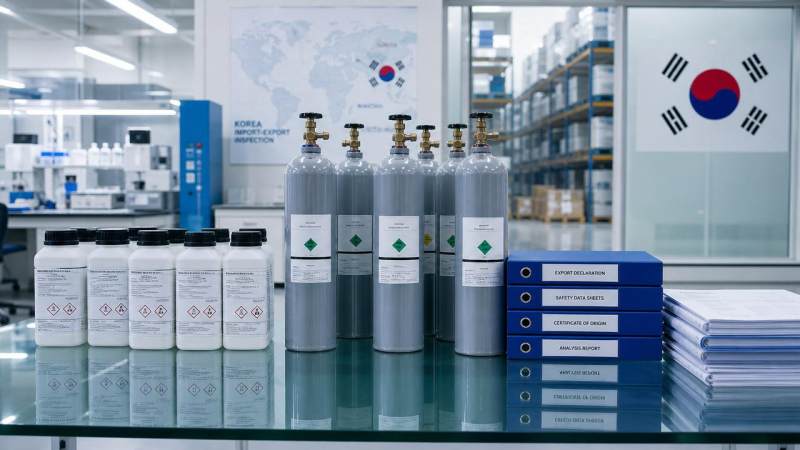
On May 12, 2026, a key amendment to Korea’s K-REACH Enforcement Decree took effect, bringing immediate compliance relevance for overseas manufacturers selling regulated substances into South Korea. The update clarifies that when an overseas manufacturer changes its Only Representative (OR), the regulatory obligations of the former and successor OR can be legally inherited, while also adding services for joint submission dispute mediation and data deadline extension applications. For Chinese exporters involved in chemicals, electronic specialty gases, photoresists, wet electronic chemicals, and other regulated substances, this is worth close attention because it affects how authorization, compliance continuity, and market access arrangements may be managed in practice.
What the amendment now makes clear
According to the information provided, the revised K-REACH Enforcement Decree became effective on May 12, 2026. The confirmed change is that, when an overseas manufacturer replaces its OR, the regulatory obligations connected to the former OR and the new OR may be carried over under the amended rules. The amendment also introduces two additional service functions: dispute mediation for joint submissions and applications for data submission deadline extensions. The reported scope of impact directly includes Chinese exporters selling regulated substances into the Korean market, including chemicals, electronic specialty gases, photoresists, and wet electronic chemicals.
Where the operational impact is likely to appear
Export arrangements tied to OR appointments
From an industry perspective, direct exporters may feel the impact first because OR designation is closely linked to how compliance responsibilities are organized for products entering South Korea. What deserves closer attention is whether an OR change is treated only as an administrative update or as a transition that requires careful continuity management of existing obligations.
Suppliers of regulated electronic materials
For businesses supplying electronic specialty gases, photoresists, and wet electronic chemicals, the amendment matters because these categories are specifically identified as affected by the change. Analysis shows that the practical pressure is likely to concentrate on authorization arrangements, document continuity, and the coordination needed when the responsible OR entity changes.
Compliance and supply chain service providers
Service providers supporting registrations, submissions, and regulatory communication may also be affected because the amendment introduces dispute mediation for joint submissions and a channel for requesting data deadline extensions. Observably, this could change how procedural issues are handled when multiple parties are involved in submission-related coordination.
Korean customers and downstream buyers
For buyers and downstream business counterparts in Korea, the issue is less about the text of the amendment itself and more about whether suppliers can maintain stable compliance arrangements during an OR transition. From an industry perspective, customers may pay closer attention to the continuity of regulatory responsibility behind imported substances.
What companies should watch now
How official wording is applied in practice
Analysis shows that the most immediate point is not only the legal text itself, but also how the clarified inheritance of OR obligations is applied in actual compliance procedures. Companies should distinguish between the policy signal in the amendment and the practical documentation or procedural expectations that may follow.
Which product lines need priority review
Businesses selling chemicals, electronic specialty gases, photoresists, wet electronic chemicals, and other regulated substances into Korea should review which product lines depend on existing OR structures. What deserves closer attention is whether certain categories face greater operational sensitivity when authorization arrangements are updated.
Transition readiness for OR replacement
Where an OR change is planned or possible, companies may need to focus on transition readiness. Observably, this includes checking whether internal records, authorization materials, submission-related files, and counterpart communication are aligned well enough to support a compliant handover.
Use of new procedural channels
The addition of joint submission dispute mediation and data deadline extension application services is also a practical point to monitor. Analysis shows that companies involved in shared submission arrangements or data timing issues should pay attention to how and when these channels may become relevant to ongoing business execution.
Why this looks like more than a narrow procedural update
This section is an editorial observation. It is more appropriate to understand this amendment as a targeted regulatory signal rather than as a standalone administrative detail. The clarification around OR obligation inheritance suggests that OR replacement is being treated with greater procedural continuity, which matters for cross-border suppliers that rely on stable compliance structures in the Korean market. At the same time, the addition of dispute mediation and data extension services indicates that authorities are also addressing friction points in submission practice. Even so, this should still be viewed with caution as an area requiring continued observation, especially in terms of implementation details.
How the market may best read this development
At this stage, the amendment is best understood as an immediately relevant compliance update with longer-term implications for how overseas manufacturers structure Korean market access through OR arrangements. It does not by itself confirm broader market outcomes, but it does signal that OR transitions, submission coordination, and procedural continuity deserve closer management attention. A neutral reading is that this is both a current operational change and a regulatory signal that companies selling regulated substances into Korea should continue to track.
Basis of this article and what still needs verification
This article is generated based on the user-provided news title, event date, and event summary. For this type of development, commonly relevant source categories may include official government notices, company disclosures, industry association updates, authoritative media reporting, and standard-setting or regulatory documents. No specific official source link was provided in the input, so the exact official reference still needs ongoing verification. Areas that merit continued monitoring include any further official wording, implementation guidance, and practical interpretation affecting OR transitions, joint submissions, and data deadline extension procedures.
Recommended News
- 2026.09.18How to Evaluate a Polymer Compounding Manufacturer for High-Performance ApplicationsMr. Arthur Mercer
- 2026.09.17Chemical Manufacturing Compliance: Building a REACH-Ready Chemical Inventory SystemDr. Felix Sterling
- 2026.09.16Battery Material Purity Control: Critical Tests for Stable Cell PerformanceElectrochemistry Fellow
The VitalSync Intelligence Brief
Receive daily deep-dives into MedTech innovations and regulatory shifts.