
EU REACH Moves Toward Broader Bisphenol Limits
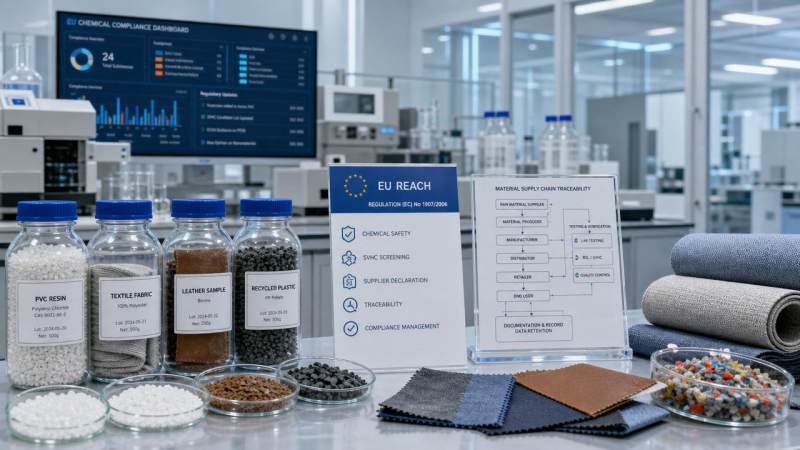
On April 23, 2026, Germany formally submitted an intention under the EU REACH framework to restrict bisphenols, signaling a broader regulatory push that reaches beyond single-product control and into lifecycle management. The development deserves close attention from material formulators, processors, recyclers, traders, and second-hand market participants because the proposed scope touches PVC, textiles, leather, recycled plastics, and resale channels, with direct relevance for compliance design in engineering plastics, coatings, composites, and recovery supply chains.
What Has Been Confirmed So Far
The confirmed event is Germany’s formal submission of a restriction intention for bisphenols under EU REACH on April 23, 2026. According to the provided information, the intended restriction would apply systematic controls across the lifecycle use of bisphenols in PVC, textiles, leather, recycled plastics, and second-hand market activities.
The same information states that the Annex XV dossier is expected to be submitted on March 12, 2027. It also indicates that the dossier is expected to include a fallback mechanism that could dynamically add newly identified endocrine disruptors for the environment.
The stated direct relevance of this policy development is to global compliance design for engineering plastics, coating materials, composite materials, and recycling-related supply chains that involve bisphenol-containing formulations.
Where the Pressure Could Appear First
Material and formulation decisions may come under earlier review
From an industry perspective, formulators and raw-material procurement teams are likely to feel the impact first because the restriction intention is framed around bisphenol substances rather than a narrow single-use scenario. The practical pressure point may be the need to identify where bisphenols are embedded in formulations used for plastics, coatings, and composite systems, especially when those materials are supplied into EU-facing applications.
Processors and manufacturers may face broader product-scope checks
Processors working with PVC, textile-related materials, leather applications, or composite production may need to pay closer attention to how input substances are documented and communicated through production and delivery stages. Analysis shows that the issue is not only whether bisphenols are present, but also whether product categories that move across multiple downstream uses can still be managed consistently if the eventual restriction language becomes broader.
Recycling and second-hand channels may see added compliance complexity
What deserves closer attention is the inclusion of recycled plastics and second-hand market activity in the described scope. For recyclers, traders, and circulation platforms, the challenge may be less about a single new ban and more about how substance-related controls interact with material recovery, resale, and traceability. This is particularly relevant where legacy material streams may contain bisphenol-based formulations.
Cross-border suppliers may need to reassess EU-facing documentation
Direct trade companies, supply-chain service providers, and overseas suppliers could be affected through customer questionnaires, specification reviews, and contract-related compliance checks. Observably, once a restriction intention is formally on the table, downstream communication often becomes a business issue as much as a technical one, especially for products entering regulated EU supply chains.
What Companies Should Watch Before the Dossier Arrives
Track how the official wording evolves
Companies should closely watch how the Annex XV dossier defines scope, covered uses, and the practical reach of the fallback mechanism mentioned in the provided summary. The difference between an early policy signal and final operational obligations may depend heavily on wording, categorization, and how future additions are handled.
Map exposure by product family and market destination
Businesses with engineering plastics, coatings, composites, PVC-related goods, textile-linked materials, leather applications, or recycled content streams should review which product families may involve bisphenol-containing formulations and which of those are linked to EU market access. This is a practical screening exercise rather than a conclusion that all such products will face the same outcome.
Prepare supplier and customer communication early
From a business operations perspective, it is worth reviewing supplier declarations, formulation records, technical documents, and customer-facing compliance statements. If customers begin asking whether bisphenols are present in materials or recycled inputs, delayed responses may affect qualification, procurement timing, or delivery confidence even before formal restrictions are finalized.
Separate policy intent from immediate legal effect
It is more appropriate to understand this stage as a formal regulatory move with clear direction, but not yet as a completed restriction outcome. Companies should avoid assuming final requirements too early, while also avoiding passive observation where product design or sourcing decisions could become harder to adjust later.
Why This Looks Like More Than a Narrow Substance Update
Analysis shows that this development is better read as a regulatory signal about how bisphenol-related risk may be managed across product lifecycles, not only within a single application segment. The reference to PVC, textiles, leather, recycled plastics, and second-hand markets suggests attention to substance presence across original manufacture, reuse, and recirculation.
At the same time, this is still a stage that requires continued observation. The confirmed facts point to a formal restriction intention and an expected dossier date, but the market implications will depend on how the final dossier frames coverage, definitions, and the use of the fallback clause for newly identified endocrine disruptors for the environment.
How to Read the Signal at This Stage
The industry significance of this update lies in its breadth: it links bisphenol controls to product design, procurement, manufacturing, recycling, and resale rather than isolating the issue in one segment. For businesses connected to bisphenol-containing materials, the more rational interpretation at present is that this is an important medium- to long-term compliance signal with near-term preparation value, rather than a completed rule change with fully settled obligations.
Basis of This Article
This article is based on the user-provided news title, event date, and event summary. For developments of this type, relevant source categories typically include official regulatory notices, company disclosures, industry association updates, authoritative media reporting, and standard-setting or compliance-related documents.
No specific official source link was provided in the input, so the precise documentary basis still requires ongoing verification. Continued monitoring should focus on the Annex XV dossier submission expected on March 12, 2027, any later official wording on scope, and any clarification related to the dynamic addition of newly identified environmental endocrine disruptors.
Recommended News
- 2026.09.18How to Evaluate a Polymer Compounding Manufacturer for High-Performance ApplicationsMr. Arthur Mercer
- 2026.09.17Chemical Manufacturing Compliance: Building a REACH-Ready Chemical Inventory SystemDr. Felix Sterling
- 2026.09.16Battery Material Purity Control: Critical Tests for Stable Cell PerformanceElectrochemistry Fellow
The VitalSync Intelligence Brief
Receive daily deep-dives into MedTech innovations and regulatory shifts.