
What Is the Maximum Processing Temperature for PVDF Film?
What Is the Maximum Processing Temperature for PVDF Film?
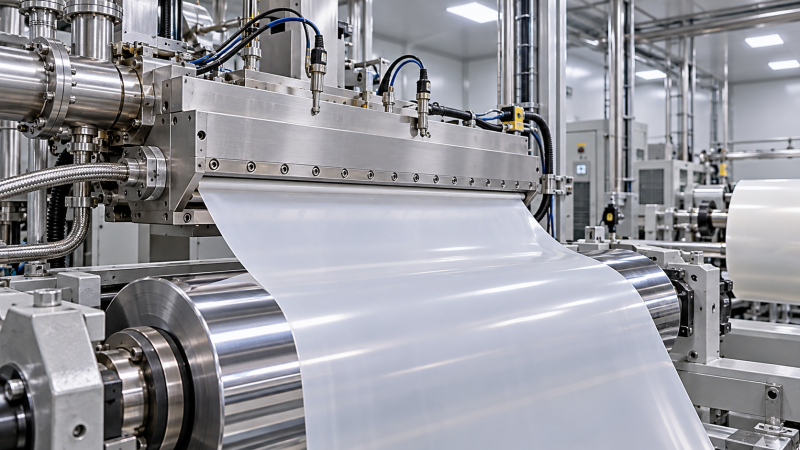
For engineers asking “what is max processing temperature for PVDF fluoropolymer film,” the useful starting point is approximately 200–260°C for common melt-processing operations. That is a working range, not a universal maximum. The permissible upper temperature depends on the resin grade, processing method, equipment, and how long the material remains hot.
The distinction matters on a production line. A temperature that produces acceptable film during steady extrusion may cause discoloration or deposits when throughput drops and residence time increases. Likewise, a temperature suitable for melting pellets can destroy the dimensional stability of an already manufactured film.
Use the supplier’s grade-specific processing guidance to establish the upper operating limit. Neither the melting point nor a laboratory decomposition temperature is a substitute for that guidance.
Which temperature limit are you actually looking for?
“Maximum temperature” can mean several different things in PVDF specifications. Before comparing materials or approving a process, identify which one the document describes.
Melting-point values should be checked against the actual grade’s technical data sheet, especially for copolymers and modified formulations. More importantly, melting does not immediately produce the flow behavior needed for a uniform thin film. Conversely, a film can shrink, creep, or lose useful properties well before substantial decomposition becomes measurable.
Why 260°C is not a universal ceiling—or a default setpoint
The upper end of a general processing range is easy to misread. It is not a target that improves every film process. Some grades or processes may use supplier-approved conditions outside the common range; others require a narrower window. Without the grade recommendation, simply choosing a hotter setting is guesswork.
PVDF melt viscosity varies with molecular weight, formulation, temperature, and shear rate. A higher-viscosity grade may need a different screw configuration or throughput strategy rather than a large temperature increase. Raising heat to overcome excessive pressure can conceal a blocked screen, a restrictive die, or unsuitable equipment.
There is also a measurement problem: barrel set temperature is not necessarily actual melt temperature. Mechanical shear can add heat, while sensor location and thermal lag can obscure local conditions. Two lines displaying identical setpoints may expose the polymer to different thermal histories.
A defensible operating ceiling therefore needs two pieces of information: the supplier’s permitted conditions and evidence that the material stays within them on the actual line. Qualified melt-temperature measurement, pressure trends, throughput records, and film inspection are more informative together than a heater display alone.
Residence time changes the answer
Consider a line making acceptable film at a stable output. The operator slows production to investigate winding problems but leaves the temperature profile unchanged. Material now spends longer in the barrel, adapter, and die. The temperature has not increased, yet the thermal exposure has.
This is why a processing limit should never be communicated as a temperature alone. Startup, shutdown, screen changes, and unplanned stops all require their own supplier-supported procedures. Material trapped in poorly swept passages may remain hot much longer than the average residence time suggests.
Possible warning signs include yellowing or browning, dark specks, deposits, bubbles, pressure instability, and a shift in film properties. None proves thermal degradation by itself. Contamination, entrained air, feed problems, and equipment wear can produce overlapping symptoms.
The practical response is to investigate the combination of temperature, time, contamination, and equipment condition—not automatically raise the die temperature. Severe overheating or incompatible contamination can cause PVDF to decompose and release hazardous products, including hydrogen fluoride. Local exhaust ventilation and emergency procedures must follow the current safety data sheet and the facility’s risk assessment. Odor is not a reliable exposure warning.
Extruding film and reheating finished film are different jobs
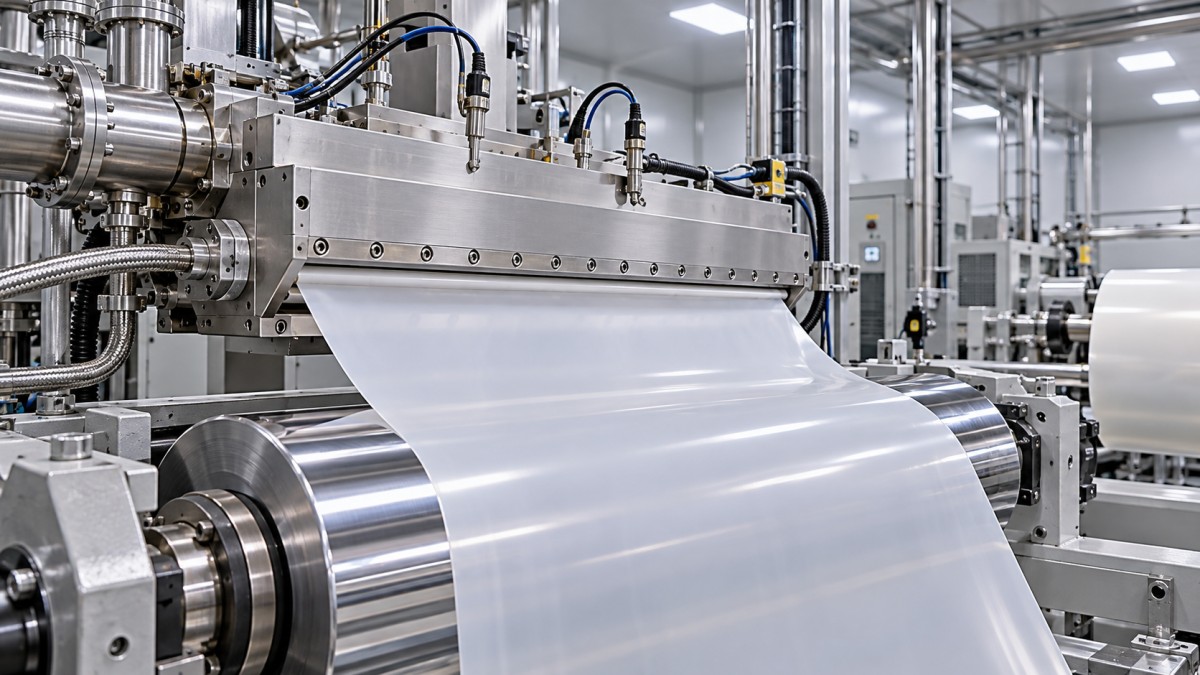
The common 200–260°C range concerns melt processing. It should not be copied into a laminator, drying oven, or heat-treatment specification for finished PVDF film.
Cast-film and blown-film extrusion
For extrusion, sufficient melt flow must be balanced against melt strength, thermal stability, and cooling behavior. Cast-film production must control drawdown and chill-roll contact. Blown-film production also needs enough melt strength to maintain a stable bubble. A temperature increase that reduces pressure may simultaneously make web or bubble control more difficult.
The useful question is not “How hot can this resin get?” It is “At what verified melt conditions does this grade consistently meet thickness, appearance, mechanical, and functional requirements?” The lowest temperature is not automatically best either: inadequate melting can cause poor homogenization and excessive pressure.
Lamination, annealing, and functional films
When an existing film is heated, the acceptable limit may be governed by shrinkage, orientation loss, adhesive behavior, or damage to another layer. Web tension and dwell time become critical. A brief contact with a heated roll and a prolonged oven exposure are not interchangeable, even at the same nominal temperature.
Oriented or poled PVDF films deserve particular care. Their useful performance depends on structure and processing history, not merely chemical survival. A film may remain intact while its piezoelectric response or dimensional stability changes. Qualification should measure the relevant property after heating rather than rely on appearance.
Solution-cast films and membranes introduce another distinction: drying conditions depend on the solvent system, residual-solvent target, and intended morphology. Melt-extrusion recommendations do not establish a safe drying recipe.
How to establish a usable upper limit on your line
Start with the exact commercial grade, not simply “PVDF.” Homopolymer, copolymer, filled, pigmented, and specialty formulations should not be treated as thermally interchangeable. Obtain the current technical data sheet, safety data sheet, and any separate extrusion or film-processing guide.
If the documentation gives only typical conditions, ask the supplier to clarify the recommended maximum melt temperature, allowable hold conditions, and shutdown procedure. Also confirm whether the stated temperatures refer to barrel zones, die settings, or measured melt temperature. These are different specifications.
A controlled trial should then connect operating conditions to acceptance criteria:
- Record the temperature profile, actual melt temperature where measurable, screw speed, output, pressure, and cooling conditions.
- Allow the process to stabilize after each adjustment; changing several variables together makes the result difficult to interpret.
- Inspect thickness distribution, surface defects, color, and deposits, then test properties relevant to the application.
- Define permitted interruptions and restart conditions rather than qualifying only uninterrupted production.
For an electrical film, dielectric performance may govern acceptance. For a chemically exposed liner, integrity and retained mechanical properties may matter more. High-purity applications can require contamination checks that ordinary visual inspection will miss. The processing window is acceptable only when the finished material passes its intended requirements.
What buyers should request before approving a replacement grade
A replacement resin with a similar melting point is not necessarily a drop-in alternative. Melt flow, molecular-weight distribution, additives, purity requirements, and film-forming behavior can change the usable window. Even melt-flow figures need matching test conditions before they can be compared meaningfully.
Request the grade identity, relevant processing guidance, lot documentation appropriate to the application, and notification arrangements for formulation changes. For purchased film, ask about thermal shrinkage under specified conditions and any restrictions associated with orientation, coatings, or surface treatment.
This connection between processing evidence and supplier evaluation is central to the materials intelligence covered by Global Advanced Materials & Chemical Systems (AMCS). A temperature claim becomes commercially useful only when buyers understand which grade, process, and performance requirement it applies to.
The practical answer: use approximately 200–260°C as an orientation range for common PVDF melt processing, not as an authorization to operate at 260°C. Establish the actual upper limit from grade-specific guidance, verified melt conditions, residence time, and finished-film testing. If those details are missing, the next step is to obtain them—not to select a higher temperature.
Recommended News
The VitalSync Intelligence Brief
Receive daily deep-dives into MedTech innovations and regulatory shifts.