
Chemical Thermodynamics Errors That Distort Process Scale-Up
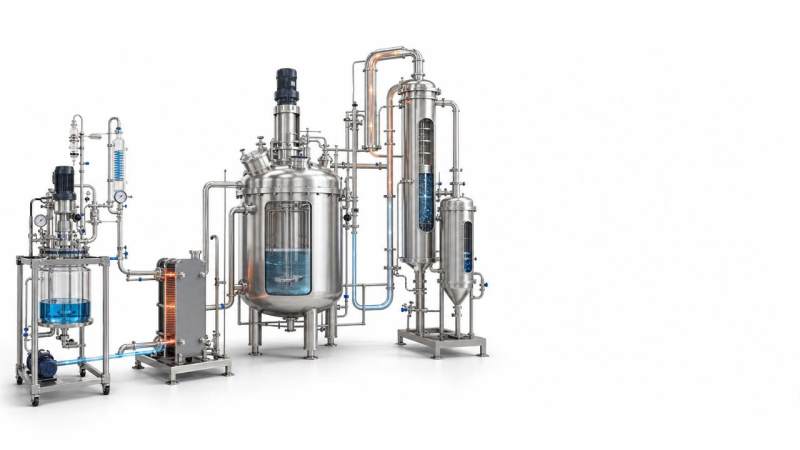
Process scale-up often fails not because the reaction pathway is incorrect, but because key thermodynamic assumptions are wrong when moving from lab glassware to industrial equipment.
For project managers and engineering leaders, that matters because chemical thermodynamics directly affects yield stability, utility demand, safety margin, equipment sizing, and commissioning speed.
The core search intent behind “chemical thermodynamics” in this context is practical rather than academic. Readers want to know which thermodynamic errors cause scale-up distortion and how to prevent expensive surprises.
They are usually less interested in textbook derivations than in decision risks: where heat release is underestimated, where phase behavior shifts unexpectedly, and where equilibrium assumptions no longer hold.
For this audience, the most useful content is a decision-oriented framework. It should show how thermodynamic mistakes appear in real projects, what warning signs to track, and when to escalate testing.
This article therefore focuses on the errors most likely to damage schedule, cost, operability, and product consistency, while keeping general theory in the background where it belongs.
Why chemical thermodynamics becomes a scale-up problem long before start-up
In early development, teams often treat thermodynamics as a validation task for chemists. In practice, it should be a project control issue from feasibility through detailed engineering.
A lab reaction that appears stable at kilogram scale may behave very differently in larger vessels because heat transfer, vapor-liquid balance, and mixing intensity change at the same time.
When chemical thermodynamics is oversimplified, project teams usually discover it indirectly. They see longer cycle times, fouling, off-spec composition, vent overload, or inconsistent conversion between batches.
By then, the problem is no longer scientific. It becomes a capital and schedule issue involving redesign, retesting, delayed qualification, and reduced confidence from operations and customers.
For leaders managing advanced materials, battery chemicals, electronic chemicals, or specialty polymers, the stakes are even higher because purity, narrow specifications, and process repeatability leave little room for thermal error.
The first major error: treating heat of reaction as a fixed number
One of the most common scale-up mistakes is assuming that reaction enthalpy measured in the lab remains constant across the full operating window of temperature, concentration, and composition.
That assumption is dangerous because many systems are not thermally linear. Heat release can change with solvent ratio, feed sequence, conversion level, impurity content, or side-reaction onset.
At small scale, the reactor may dissipate heat fast enough that these shifts remain hidden. At larger scale, slower heat removal can expose exothermic zones and accelerate unwanted pathways.
Project teams often rely on a single calorimetry result and use it as a universal design basis. That is rarely sufficient for scale-up of sensitive or multi-step chemistry.
A better approach is to map enthalpy behavior across realistic operating conditions, including upset scenarios such as feed interruptions, hold periods, and temperature deviations during charging.
For project managers, the business question is simple: is the heat-release model robust enough to support equipment sizing, relief design, and batch-time commitments without heroic operator intervention?
The second error: underestimating the effect of phase behavior changes
Many scale-up failures are not caused by reaction kinetics alone. They occur because the process enters an unexpected phase regime as pressure, temperature, or composition shifts in larger equipment.
A system that looks single-phase in a flask may become partially vaporized, locally supersaturated, or liquid-liquid split under plant conditions. Each change alters mass transfer and thermal response.
This is especially relevant in solvent recovery, crystallization, gas absorption, distillation, and moisture-sensitive synthesis. Small deviations in vapor-liquid or liquid-liquid equilibrium can distort the entire operating window.
In semiconductor electronic chemicals and ultra-high-purity formulations, phase behavior errors may also increase contamination risk because droplets, precipitates, or stagnant pockets become impurity traps.
For battery chemical intermediates or specialty monomers, an unnoticed phase split can reduce conversion, create hot spots, and complicate downstream washing or filtration in ways not predicted by lab data.
Managers should ask whether phase diagrams were validated at real concentrations and real impurities, not merely estimated from idealized databases or clean-component assumptions.
The third error: assuming equilibrium is reached when residence time says otherwise
Another frequent distortion comes from mixing up thermodynamic possibility with actual process reality. A reaction may have a favorable equilibrium position and still fail industrially if approach to equilibrium is slow.
Lab teams sometimes report final composition after long holding periods and treat that endpoint as representative. Production systems, however, operate under stricter throughput targets and narrower residence-time limits.
If scale-up decisions use equilibrium composition without checking how quickly the system approaches it, design calculations can overstate yield and understate recycle load.
This matters in esterification, salt formation, gas-solid reactions, polymer finishing, adsorption-regeneration loops, and purification steps where equilibrium and transport interact strongly.
For project leaders, the resulting symptoms are familiar: lower-than-promised output, utility overuse, larger recycle tanks, unplanned bottlenecks, and frustrated operations teams who cannot hit the design case.
The practical control question is not only “What is the equilibrium?” but also “Can the plant reach a useful fraction of equilibrium within the available cycle time and hardware constraints?”
The fourth error: using ideal models for strongly non-ideal systems
Many industrial mixtures are highly non-ideal, yet project estimates still rely on simplified correlations because they are convenient during front-end design. This is where hidden scale-up risk often enters.
Electrolytes, polar solvents, associating compounds, reactive intermediates, and concentrated salt systems rarely behave ideally. Activity coefficients, fugacity corrections, and composition-dependent properties can become decisive.
If the thermodynamic model is wrong, material balance may still look acceptable on paper while separation performance, solvent recovery, and impurity partitioning drift badly in the plant.
This problem is acute in high-purity electronic chemicals, where trace species distribution across phases can determine whether a product meets ultra-low metal or moisture specifications.
It also affects specialty engineering plastics and precursor purification because non-ideal interactions influence devolatilization, residual monomer removal, and thermal stability during finishing operations.
Leaders should not ask only whether a simulator was used. They should ask whether the property package was validated against real plant-relevant data for the exact composition range.
The fifth error: ignoring how impurities reshape thermodynamic behavior
Scale-up models often focus on major components and treat impurities as analytical concerns. In reality, trace contaminants can shift boiling behavior, catalyze side reactions, and destabilize expected equilibria.
In advanced materials processing, that risk is amplified because specification windows are narrow and impurities may come from upstream solvents, catalyst residues, corrosion products, or packaging interactions.
A parts-per-million impurity may seem negligible in stoichiometric terms, yet it can alter crystallization habit, trigger decomposition, poison catalysts, or change gas evolution onset.
For semiconductor gases and wet electronic chemicals, impurity-driven thermodynamic effects are particularly dangerous because they can create latent instability long before standard process indicators show a problem.
Project managers should ensure impurity mapping is not limited to final product testing. It should feed back into thermodynamic review, especially where thermal decomposition or phase transition margins are tight.
If a process depends on absolute purity, then impurity thermodynamics is not a side topic. It is part of the main design basis.
The sixth error: separating thermodynamics from heat and mass transfer during review
In real plants, chemical thermodynamics never acts alone. Its consequences are filtered through mixing quality, wall heat flux, vapor disengagement, particle size distribution, and equipment geometry.
Yet many organizations review thermodynamics in one workstream and transport phenomena in another. That separation can hide coupled risks until pilot or commissioning stages.
For example, a reaction may be thermodynamically manageable in a well-mixed lab reactor but become unstable when feed addition creates localized concentration peaks in a larger vessel.
Likewise, a crystallization may appear predictable from solubility data but deliver broad particle distribution when cooling profile and suspension hydrodynamics shift in scale.
The management implication is important: scale-up errors often arise not from one bad number but from weak integration between thermodynamic assumptions and equipment realities.
Cross-functional review between process chemistry, simulation, mechanical design, EHS, and operations is therefore a risk-control tool, not an administrative exercise.
How project leaders can spot thermodynamic risk before it becomes a plant problem
Most thermodynamic failures leave early signals. The challenge is recognizing them before procurement and construction lock the process into an expensive path.
One warning sign is excessive dependence on textbook property data without verification under real compositions, especially when solvent blends, impurities, or reactive intermediates are involved.
Another sign is when process performance appears excellent in the lab but only under narrow manual control, unusually long hold times, or conditions that are unrealistic for industrial throughput.
Teams should also be cautious when pilot data show unexplained batch variability, foaming, pressure excursions, or drifting utility demand. These often point to unresolved thermodynamic behavior rather than operator inconsistency.
A further red flag appears when equipment design margins are justified vaguely, such as “standard practice” or “similar process,” without a clear basis in measured enthalpy or equilibrium data.
For project managers, a useful governance question is: which assumptions, if wrong by twenty percent, would most seriously damage safety, capacity, purity, or ramp-up schedule?
A practical decision framework for reducing chemical thermodynamics errors
Start by ranking process steps according to consequence, not scientific elegance. Focus first on reactions and separations where thermodynamic uncertainty could trigger safety events or commercial failure.
Next, define the minimum data needed for decision confidence. That may include reaction calorimetry, VLE or LLE validation, decomposition onset data, solubility curves, or impurity sensitivity studies.
Then test the operating envelope rather than only the target point. Scale-up problems often emerge in transitions, such as start-up, shutdown, feed switching, and off-spec recycle conditions.
Simulation should follow data, not replace it. Use models to integrate and stress-test the process, but calibrate them with experiments that reflect actual plant composition and residence-time limits.
Finally, connect thermodynamic findings to project controls. If uncertainty remains high, adjust contingency, phase-gate criteria, pilot scope, and commissioning strategy instead of hiding the risk in optimistic assumptions.
This approach helps leadership make better trade-offs between speed and confidence, especially in industries where purity and process stability define competitive advantage.
What this means for advanced materials and high-purity chemical manufacturing
In commodity processes, a thermodynamic error may reduce efficiency. In advanced materials, it can erase product qualification, damage customer trust, or make a process economically nonviable.
That is because these sectors operate close to material performance limits. Carbon fiber precursors, battery chemicals, electronic chemicals, specialty polymers, and precision gases all depend on tight thermal control.
Small deviations in heat balance or phase behavior can influence molecular weight distribution, crystal form, ionic contamination, solvent residue, or gas purity far beyond acceptable thresholds.
As supply chains regionalize and customers demand faster qualification, project teams cannot afford to treat chemical thermodynamics as a back-end validation issue.
It must be embedded early into process design, technology transfer, and capital planning, especially where ultra-high purity and proprietary formulations are the basis of competitive moat.
Conclusion
The most damaging scale-up failures rarely come from obvious chemistry mistakes. They come from subtle thermodynamic assumptions that looked harmless in development and became expensive in industrial reality.
For project managers and engineering leaders, the key lesson is that chemical thermodynamics is not just a scientific topic. It is a strategic control point for safety, yield, quality, and schedule.
If heat of reaction is oversimplified, phase behavior is poorly mapped, equilibrium is misapplied, or impurity effects are ignored, scale-up decisions can drift far from plant truth.
The best defense is structured skepticism: validate critical data under realistic conditions, integrate thermodynamics with transport and equipment design, and escalate uncertainty before it becomes a capital problem.
When handled this way, chemical thermodynamics stops being a hidden source of distortion and becomes a practical tool for reliable scale-up and stronger manufacturing outcomes.
Recommended News
- 2026.09.18How to Evaluate a Polymer Compounding Manufacturer for High-Performance ApplicationsMr. Arthur Mercer
- 2026.09.17Chemical Manufacturing Compliance: Building a REACH-Ready Chemical Inventory SystemDr. Felix Sterling
- 2026.09.16Battery Material Purity Control: Critical Tests for Stable Cell PerformanceElectrochemistry Fellow
The VitalSync Intelligence Brief
Receive daily deep-dives into MedTech innovations and regulatory shifts.