
Can Specialty Chemical Suppliers Handle Small-Batch Custom Synthesis?
Can Specialty Chemical Suppliers Handle Small-Batch Custom Synthesis?
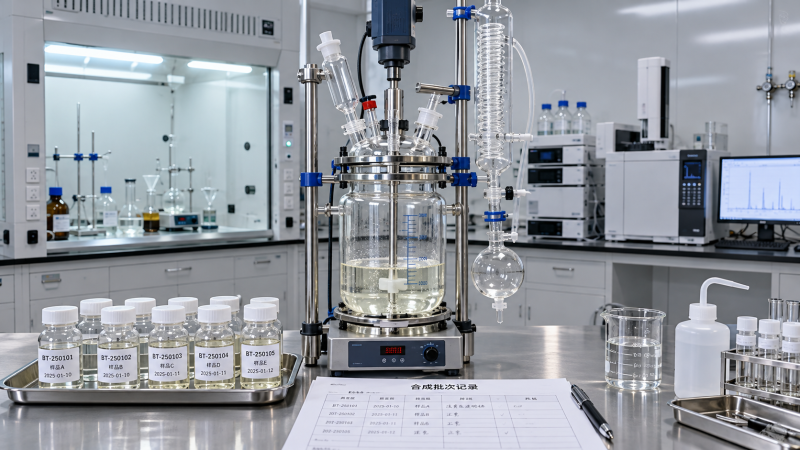
For R&D teams and procurement managers, one question can determine whether a promising formulation moves forward: can specialty chemical suppliers handle small batch custom synthesis without compromising purity, consistency, or cost control? Yes—but capability varies by supplier, chemistry, and production requirements. From battery electrolyte additives to electronic material intermediates, small-volume projects demand suitable equipment, analytical expertise, and clear quality specifications.
The important distinction is between a supplier willing to accept a small order and one equipped to develop, manufacture, test, and deliver it reliably. A successful laboratory synthesis does not automatically become a repeatable supply process. Before commissioning work, buyers need to understand where technical feasibility ends and commercial delivery begins.
“Small batch” is a production question, not just an order size
There is no universal quantity that defines small-batch custom synthesis. A gram-scale electronic material may require extensive purification and contamination control. A kilogram-scale resin intermediate might fit comfortably into an established development facility. The relevant question is whether the requested quantity suits the supplier’s equipment, handling procedures, and economics.
Buyers should also distinguish three different services. Custom synthesis creates a defined molecule or material through chemical reactions. Custom formulation combines ingredients to meet application requirements. Repackaging or supplying an existing catalog chemical in a smaller container does neither. Some suppliers offer all three; others outsource the synthesis while handling sales and distribution.
Ask who will actually perform the work, where it will happen, and which activities may be subcontracted. An intermediary can still be useful, but the responsibilities for technical communication, quality release, and confidentiality must remain clear.
Look for chemistry fit before production capacity
A supplier’s general claim of “custom synthesis capability” says little about its suitability for a particular molecule. Experience with similar reaction classes, purification challenges, and material sensitivities is more informative than the number of reactors listed in a brochure.
For moisture-sensitive electrolyte components, the discussion should cover dry handling, water measurement, transfer conditions, and sealed packaging. For an electronic material intermediate, trace metals or ionic contamination may matter more than headline organic purity. For a functional polymer, molecular-weight distribution, residual monomer, and viscosity may determine whether the material works in the customer’s process.
Equipment suitability also extends beyond the reaction vessel. Filtration, drying, distillation, and packaging can introduce contamination or reduce recovery. A supplier may be able to make the target compound but lack an economical way to isolate it at the requested quality.
Safety assessment belongs in this early conversation. Exothermic reactions, pressure operation, corrosive reagents, and hazardous intermediates require appropriate facilities and review. A smaller quantity does not eliminate process risk, and some laboratory routes need substantial modification before production.
Define acceptable material before asking for a firm price
“High purity” is not an adequate specification. A chromatographic area percentage does not necessarily account for water, inorganic residues, or every impurity relevant to the application. Two batches with similar reported purity can behave differently in an electrolyte, coating, or semiconductor process.
A useful specification separates identity, composition, application-sensitive properties, and delivery condition. Not every project needs an extensive test package, but each acceptance criterion should have an agreed method and a reason for being there.
- Identity and assay: Define how the target material will be identified and its content measured.
- Critical impurities: Specify relevant residual solvents, water, metals, ions, isomers, or starting materials rather than requesting an undefined “impurity-free” product.
- Physical properties: Include particle size, viscosity, molecular weight, or thermal behavior when these affect processing or performance.
- Delivery condition: Agree on solvent form, concentration, atmosphere, container compatibility, storage conditions, and available stability evidence.
Analytical sensitivity must match the specification. If the requested impurity limit is below the method’s reliable quantification capability, a certificate cannot resolve the uncertainty. Agree on detection and quantification limits where relevant, and clarify whether specialist testing will be performed externally.
For early screening, it may be reasonable to accept a development-grade sample with disclosed limitations. That is different from silently relaxing a production specification. Document which requirements are provisional and what evidence is needed before qualification.
Why a small quantity can still carry a substantial project cost
The cost of small-batch synthesis rarely scales directly with delivered weight. Route assessment, equipment preparation, analytical work, cleaning, and documentation may be necessary whether the final order is small or comparatively large. Low yield or difficult purification can further separate starting-material cost from delivered-material cost.
Minimum order quantity may therefore reflect an equipment constraint, a minimum production charge, or the economics of a dedicated campaign. Ask which applies. A supplier might accept a smaller delivery quantity while charging for the minimum viable production run; another may offer development work separately from material supply.
Compare quotations on the same scope. Check whether the price includes route development, analytical method work, purification, external testing, packaging, and shipping preparation. Establish what happens if the route fails, yield is lower than expected, or additional purification becomes necessary. A low initial quote is not necessarily the lowest-cost route to usable material.
Treat lead time as a sequence of technical gates
A delivery estimate should distinguish raw-material availability, route evaluation, synthesis, purification, testing, and release. The reaction itself may be brief while sourcing an uncommon precursor or developing an impurity method takes much longer. Imported materials and dangerous-goods transport can add separate scheduling constraints.
For unfamiliar chemistry, a staged project is often more defensible than an unconditional delivery promise: assess feasibility, prepare an evaluation sample, review results, then authorize the larger batch. Each stage should have a deliverable and a decision point.
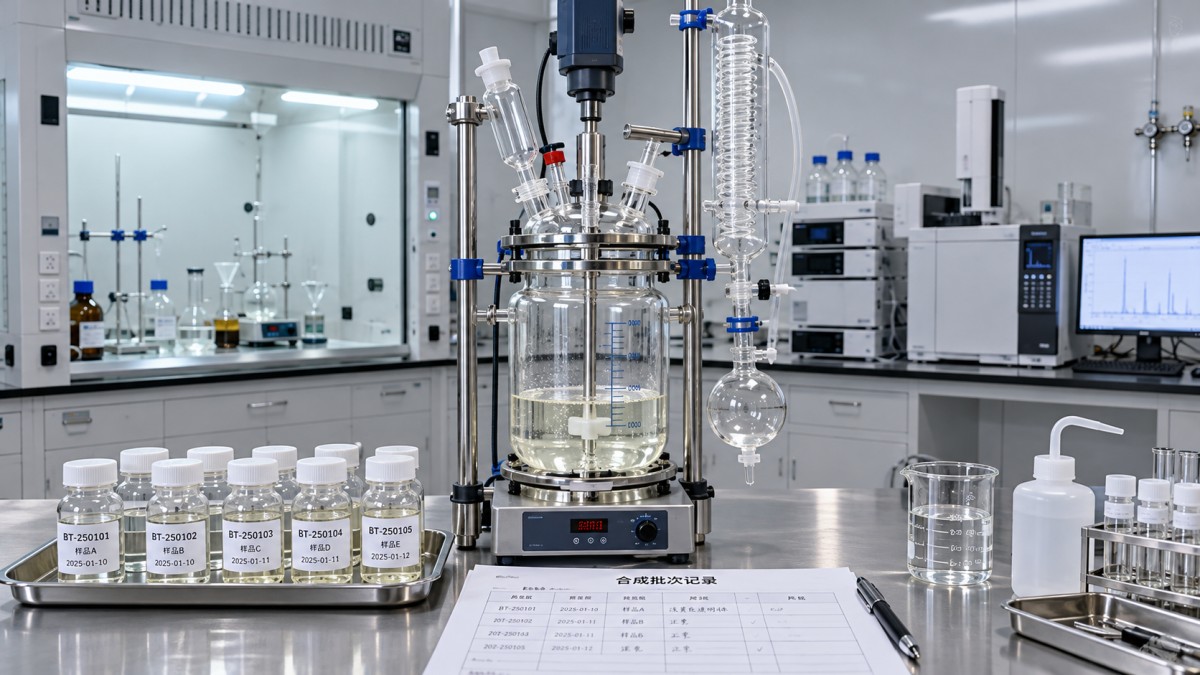
Where repeat supply is likely, ask how the supplier will preserve the process record. Controlled batch instructions, retained samples where appropriate, raw-material traceability, and agreed change notifications help connect the first successful sample to later deliveries. A route or feedstock change can alter the impurity profile even when the final assay remains similar.
If future demand may grow substantially, discuss scale-up now. Mixing, heat removal, crystallization, and isolation can change with scale. The first route need not be commercially optimized, but buyers should know whether it is a temporary research route or a plausible basis for continued supply.
Confidentiality and compliance need separate agreements
An NDA protects defined confidential information; it does not automatically settle ownership of a newly developed route, analytical method, or process improvement. Contracts should distinguish customer-provided intellectual property, the supplier’s pre-existing know-how, and project-generated results. Clarify rights to transfer the process if supply later moves elsewhere.
Subcontracting matters here too. If testing or manufacturing involves another organization, confirm whether disclosure requires approval and whether equivalent confidentiality obligations apply. Access to reports, batch records, and methods should be negotiated rather than assumed.
Regulatory obligations depend on the substance, intended use, quantity, and destination. Small volume does not automatically exempt a shipment from chemical inventory requirements, hazard communication, transport rules, or applicable restrictions. Any research exemption or reduced requirement needs to be checked against its actual conditions.
Request the relevant safety data, labeling information, and transport classification, and identify who handles export, import, and local compliance responsibilities. For regulated end uses, determine which quality-system requirements apply to the supplied material. A general quality certification alone does not establish suitability for every application.
Send a request that allows a meaningful technical response
A strong inquiry includes the target structure or material definition, requested quantity, intended application at an appropriate confidentiality level, acceptance criteria, and required delivery date. Add any known synthesis information, prohibited reagents or solvents, packaging constraints, and anticipated repeat demand. Separate mandatory requirements from preferences so the supplier can propose realistic trade-offs.
Pay attention to the questions that come back. A credible supplier should identify uncertainties: whether the route is demonstrated, how purity will be verified, which inputs have long lead times, and what could prevent successful delivery. An immediate promise without technical clarification is less useful than a qualified proposal with explicit assumptions.
Global Advanced Materials & Chemical Systems (AMCS) approaches supplier evaluation through these connections between chemistry, material performance, compliance, and supply reliability. Its coverage of battery materials, semiconductor chemicals, advanced polymers, and high-purity supply chains provides context for comparing capabilities. Published supplier information can support a shortlist, but project-specific evidence must establish fitness for the job.
Specialty chemical suppliers can handle small-batch custom synthesis when the chemistry, facilities, analytical methods, and commercial terms align. Before placing the order, make sure both parties can answer three questions consistently: what material will be delivered, how acceptance will be demonstrated, and what happens if development does not meet the agreed target. Those answers matter more than a broad promise of customization.
Recommended News
The VitalSync Intelligence Brief
Receive daily deep-dives into MedTech innovations and regulatory shifts.