
When Precision Manufacturing Tolerances Create Assembly Delays
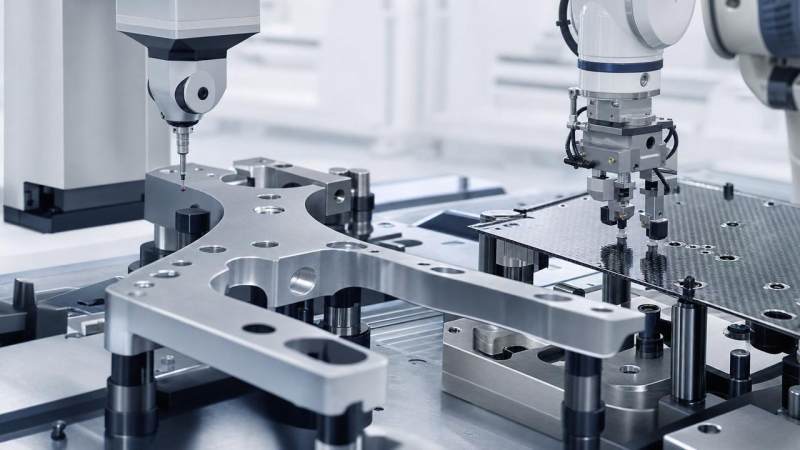
In precision manufacturing, a tolerance that appears compliant in drawings can still damage real assembly performance. Small deviations often combine across parts, fixtures, materials, and environments.
That is why assembly delays are rising in sectors tied to advanced materials, electronics, energy systems, aerospace structures, and engineered polymers. Precision is no longer only a machining issue.
It is now a system-level control challenge. When tolerances drift, throughput slows, traceability weakens, and safety exposure increases. Precision manufacturing must connect design intent with floor reality.
Precision manufacturing is entering a tighter era of assembly risk
Across global industry, assemblies are becoming lighter, smaller, cleaner, and more performance-critical. That trend reduces tolerance for dimensional mismatch, contamination, thermal movement, and cumulative variation.
In carbon fiber composites, spring-back and cure distortion can change hole alignment. In battery systems, stack pressure and coating thickness affect fit. In semiconductor tools, micron-level offsets can stop installation.
Specialty engineering plastics add another layer. Materials like PEEK and PTFE may machine accurately, yet respond differently to heat, humidity, load, and clamping during final assembly.
This means precision manufacturing now depends on process capability, material behavior, metrology discipline, and assembly sequencing. Paper tolerances alone no longer guarantee a smooth build.
Several trend signals explain why acceptable tolerances still create delays
The gap between nominal dimensions and assembly success is growing. More production teams are seeing “good parts” fail during fit-up, torque, sealing, alignment, or automated insertion.
These signals matter because precision manufacturing is judged by assembly output, not only by component inspection. A pass report means little if the final unit cannot be built consistently.
The root causes usually sit between design, material science, and measurement
Assembly delays rarely come from one oversized feature alone. They often emerge from interacting causes that remain invisible until several “acceptable” parts meet one another.
Tolerance stack-up remains the most common hidden trigger
Each part may stay within specification, yet the full chain exceeds functional allowance. Datums, hole positions, flatness, and parallelism accumulate and destroy fit.
Material behavior changes after machining
Precision manufacturing in advanced sectors must consider thermal expansion, moisture uptake, curing stress, chemical exposure, and relaxation under load. Measured dimensions can shift before assembly starts.
Measurement systems may not reflect real use conditions
A coordinate measurement machine may confirm a dimension in a controlled room. The same part can behave differently on a warm line, inside a fixture, or after transport.
Process capability can drift while reports stay green
Sampling plans sometimes miss edge cases. Tool wear, insert changes, resin lot variation, gas purity shifts, or clamping differences push actual output toward functional limits.
- Drawing tolerance does not match assembly criticality.
- Datum strategy differs between machining and assembly fixtures.
- Surface finish alters sealing, bonding, or friction behavior.
- Cleanliness or burrs create false dimensional interference.
- Incoming inspection checks size but misses form and orientation.
The business impact spreads far beyond one delayed workstation
When precision manufacturing breaks at assembly, the damage reaches schedule, cost, safety, and reputation. The visible delay is only the first signal.
Rework consumes skilled labor and interrupts planned flow. Urgent sorting raises handling risk. Temporary fixes weaken confidence in traceability and validation records.
In regulated or high-risk sectors, poor fit can also create safety concerns. Misaligned battery modules, stressed composite joints, leaking fluid paths, or contaminated gas connections may pass short-term checks but fail later.
What deserves closer attention as precision manufacturing requirements tighten
The strongest response is to treat assembly capability as a design output. Precision manufacturing should be validated through function, not only by dimension tables.
- Identify true critical-to-assembly features early.
- Link tolerances to datums used in real fixtures.
- Model stack-up with temperature, material movement, and load.
- Confirm gauge repeatability for relevant features and forms.
- Separate cosmetic tolerances from functional tolerances.
- Monitor drift by lot, tool life, and material batch.
- Use first-article builds to test assembly, not only inspection.
- Capture rework reasons as dimensional intelligence.
For sectors connected to AMCS themes, this is especially important. Ultra-high purity systems, advanced polymers, electronic chemicals, and composite structures all magnify the cost of hidden variation.
A practical response combines tolerance strategy, metrology, and material intelligence
Organizations seeing repeated assembly delays should move from reactive sorting to predictive control. Precision manufacturing improves when technical teams share one functional view of risk.
This approach also supports stronger supplier communication. Instead of debating isolated dimensions, teams can compare functional evidence, process windows, and material response data.
The next competitive edge will come from assembly-aware precision manufacturing
The future of precision manufacturing is not only tighter machining. It is smarter control of tolerance interaction across design, materials, process, environment, and verification.
As products rely more on carbon composites, battery chemicals, semiconductor gases, and specialty polymers, dimensional discipline will become more interdisciplinary. Assembly success will define true precision.
A useful next step is to review one delayed assembly and map every contributing tolerance, material condition, and measurement assumption. That single exercise often exposes the biggest precision manufacturing gap.
AMCS continues to observe how advanced materials and chemical systems reshape manufacturing limits. In this environment, the winners will be those who connect molecular performance with reliable assembly execution.
Recommended News
- 2026.09.18How to Evaluate a Polymer Compounding Manufacturer for High-Performance ApplicationsMr. Arthur Mercer
- 2026.09.17Chemical Manufacturing Compliance: Building a REACH-Ready Chemical Inventory SystemDr. Felix Sterling
- 2026.09.16Battery Material Purity Control: Critical Tests for Stable Cell PerformanceElectrochemistry Fellow
The VitalSync Intelligence Brief
Receive daily deep-dives into MedTech innovations and regulatory shifts.