
Specialty Chemicals Pricing: What Drives Hidden Cost Swings?
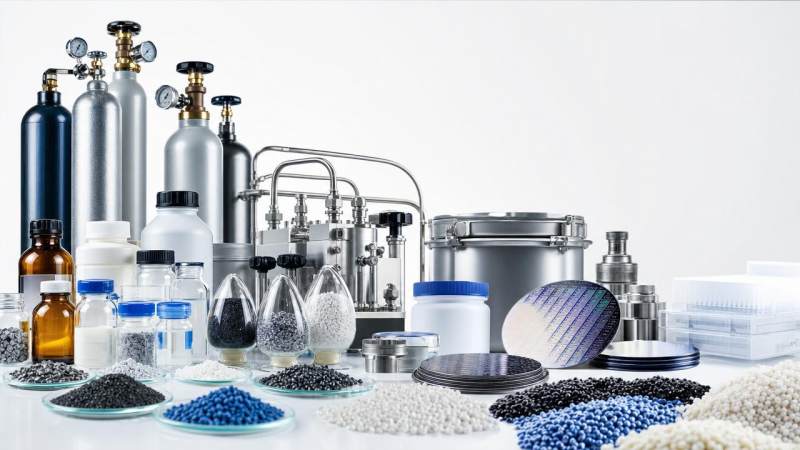
For procurement teams, specialty chemicals pricing rarely moves randomly. Each change usually reflects purity demands, feedstock swings, compliance costs, energy pressure, and supply chain fragility.
In advanced materials markets, price is never only about volume. It is tied to qualification risk, technical yield, delivery certainty, and replacement difficulty across batteries, semiconductors, composites, gases, and engineering plastics.
This guide explains what drives hidden cost swings in specialty chemicals, how to read market signals, and which checks can improve sourcing decisions when cost control must coexist with performance security.
What makes specialty chemicals pricing different from commodity chemical pricing?
Commodity chemicals often follow broad capacity, freight, and feedstock cycles. Specialty chemicals pricing reacts to those factors too, but technical constraints make the market far less elastic.
A specialty chemical may require exact molecular structure, low metal contamination, narrow particle distribution, or extreme thermal stability. Those requirements shrink the supplier pool and raise switching costs.
In sectors tracked by AMCS, purity is often the real pricing engine. Semiconductor wet chemicals, electronic gases, and battery additives can fail entire process lines if impurity thresholds drift.
That means buyers are not paying only for chemistry. They are paying for reproducibility, validation history, regulatory documentation, packaging integrity, and process consistency across global sites.
This is why specialty chemicals pricing can remain firm even during weak industrial cycles. Qualification barriers prevent rapid supplier substitution, especially where yields, safety, or export compliance are critical.
Key differences that influence cost
- Tighter purity and stability specifications
- Longer qualification and audit cycles
- Smaller approved supplier lists
- Higher compliance and traceability burdens
- Greater packaging and logistics sensitivity
Which hidden cost drivers move specialty chemicals pricing the most?
Feedstocks still matter, but hidden variables often explain the sharpest moves in specialty chemicals pricing. These drivers are easy to underestimate because they do not always appear in spot indexes.
1. Purity thresholds and yield protection
Moving from industrial grade to electronic grade can multiply purification steps. Each extra distillation, filtration, or contamination control stage adds energy use, lower yield, and stricter testing expense.
When customers demand parts-per-billion or parts-per-trillion purity, production losses rise quickly. The cost of rejected batches is built into specialty chemicals pricing long before material ships.
2. Energy and utility intensity
Many advanced chemical processes rely on high-temperature synthesis, inert gas protection, cleanroom handling, or cold-chain control. Electricity and gas spikes therefore reshape cost structures faster than many expect.
3. Regulatory pressure and reformulation risk
PFAS restrictions, transport rules, REACH obligations, and local environmental permits can force formula changes or plant upgrades. Those costs often appear as quiet increases rather than public surcharge lines.
For fluoropolymers, specialty plastics, and solvent systems, reformulation also triggers fresh qualification work. That extends timelines and tightens available supply.
4. Packaging, handling, and safety controls
High-purity acids, toxic gases, and moisture-sensitive additives need certified cylinders, lined containers, returnable packaging, and strict filling environments. Packaging is therefore part of product performance, not just transport.
5. Qualification bottlenecks
If a material is qualified on one toolset, one battery platform, or one composite process window, changing suppliers may take months. This qualification burden gives existing suppliers unusual pricing resilience.
Why do supply chains create sudden specialty chemicals pricing swings?
Supply chains for specialty chemicals are global, narrow, and technically interdependent. A disruption at any stage can trigger outsized pricing responses because replacement options are limited.
Single-site production is a frequent risk. A specialty monomer, solvent intermediate, or purification reagent may come from one region, one plant, or one approved logistics route.
Trade friction adds another layer. Export controls, sanctions screening, and local content rules can redirect supply toward domestic markets, reducing availability elsewhere and lifting specialty chemicals pricing.
Freight delays also matter more here than in bulk markets. A missed shipment of electronic chemicals or process gases can stop production lines with much larger downstream costs than the material invoice itself.
Fragile points that deserve attention
- Limited upstream precursor sources
- Regional dependence for purification capacity
- Hazardous material transport restrictions
- Port, customs, or cylinder turnaround delays
- Geopolitical disruption to qualified routes
How should buyers compare specialty chemicals pricing beyond the quoted number?
The lowest quote can become the highest total cost if it introduces scrap, requalification, shipment delay, or compliance exposure. Specialty chemicals pricing should be judged through total landed technical value.
A practical comparison starts with three layers: chemistry fit, supply resilience, and commercial transparency. All three affect long-term spend.
A useful evaluation checklist
- Confirm exact grade, impurity profile, and test method alignment.
- Review manufacturing site, backup site, and regional supply footprint.
- Check packaging compatibility, shelf life, and storage demands.
- Map regulatory documentation and restricted substance exposure.
- Estimate requalification cost if switching becomes necessary.
- Separate formula value from temporary energy or freight surcharges.
This approach is especially relevant in markets like carbon fiber resins, cathode materials, photoresists, high-purity solvents, PEEK, PTFE, and process gases, where specification drift can damage output quality.
What mistakes cause specialty chemicals pricing decisions to backfire?
One common mistake is treating specialty chemicals like interchangeable inputs. Similar names do not guarantee similar impurity maps, process behavior, or compatibility with existing production conditions.
Another error is ignoring hidden transition costs. A cheaper source may require fresh line cleaning, validation batches, engineering trials, or customer approval cycles before it becomes usable.
Short contracts can also create risk during volatile periods. If supply is structurally tight, frequent rebidding may reduce visibility and weaken allocation priority when disruptions occur.
A final mistake is overlooking regional policy exposure. Environmental rules, chemical transport limits, and local manufacturing incentives can rapidly alter future specialty chemicals pricing.
Warning signs before problems surface
- Price is far below the qualified market range
- Incomplete certificate or traceability information
- No backup site or emergency stock strategy
- Unclear impurity testing method
- Weak explanation for recent formula or process changes
How can organizations manage specialty chemicals pricing risk more effectively?
Better control starts with market intelligence tied to technical context. It is not enough to watch feedstock charts without understanding purity, qualification, and regulatory signals around the product family.
Scenario planning helps. Build cases for energy inflation, compliance tightening, export disruption, and plant outage. Then connect each case to inventory buffers, dual sourcing, and contract terms.
Supplier dialogue should also move beyond price requests. Ask about precursor concentration, purification bottlenecks, cylinder return rates, environmental capex, and regional demand shifts.
In advanced materials sectors, strategic visibility often lowers total cost more than aggressive spot buying. The best outcome is stable supply, predictable quality, and manageable specialty chemicals pricing over time.
FAQ summary table
Specialty chemicals pricing reflects much more than raw material cost. It captures the economics of purity, performance, compliance, logistics, and supply certainty across highly sensitive industrial applications.
A stronger sourcing decision comes from reading hidden drivers early, comparing total value instead of headline price, and building plans around technical and geopolitical realities.
For organizations active in advanced materials, batteries, semiconductors, composites, and specialty polymers, the next step is clear: audit current exposure, map fragile inputs, and monitor specialty chemicals pricing with deeper market intelligence.
Recommended News
- 2026.09.18How to Evaluate a Polymer Compounding Manufacturer for High-Performance ApplicationsMr. Arthur Mercer
- 2026.09.17Chemical Manufacturing Compliance: Building a REACH-Ready Chemical Inventory SystemDr. Felix Sterling
- 2026.09.16Battery Material Purity Control: Critical Tests for Stable Cell PerformanceElectrochemistry Fellow
The VitalSync Intelligence Brief
Receive daily deep-dives into MedTech innovations and regulatory shifts.