
EU Microplastics Rule Tightens Solid Matrix Exemption
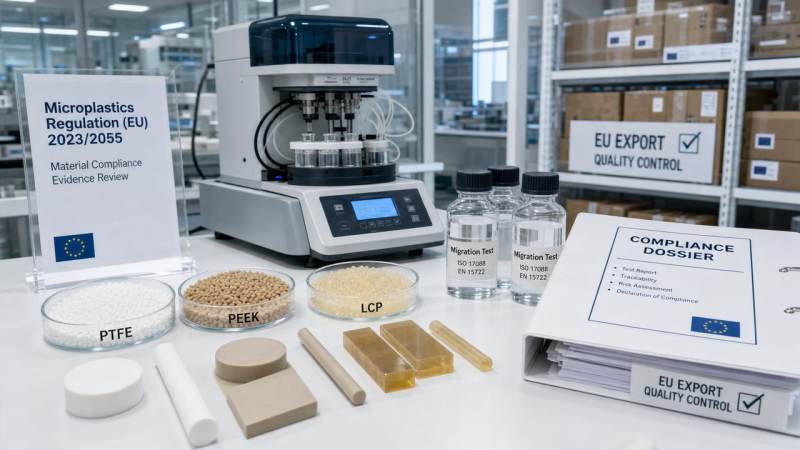
On December 25, 2025, a new EU microplastics control rule took effect, narrowing the exemption conditions for materials described as permanently embedded in a solid matrix, including engineering plastic products such as PTFE, PEEK, and LCP. For exporters supplying polymer particle-containing materials to the EU, the change is worth close attention because it shifts compliance focus toward stricter migration test data and lifecycle degradation evidence, with the first round of compliance checks scheduled to begin in Q3 2026.
What Has Formally Taken Effect
The confirmed change is that the EU rule on microplastic pollution control became effective on December 25, 2025. Under the information provided, the rule significantly tightens the exemption conditions tied to the concept of permanent embedding in a solid matrix.
The scope described in the input covers suppliers exporting materials containing polymer particles to the EU. The rule also requires manufacturers to provide more stringent migration testing data and evidence related to lifecycle degradation. The first compliance inspection cycle is set to start in Q3 2026.
Where the Pressure May Appear First
Export-facing manufacturers may face a higher documentation burden
From an industry perspective, manufacturers of engineering plastic products and related materials may feel the impact first because the exemption is no longer a simple classification issue. Where products have previously been treated as permanently embedded in a solid matrix, the practical focus may now move toward whether migration data and lifecycle evidence are sufficient for review.
Raw material and component suppliers may be asked for deeper technical support
Analysis shows that upstream suppliers may be affected through customer requests rather than only through direct enforcement. If exporters need to substantiate the status of polymer particle-containing materials, raw material providers may need to support testing records, technical descriptions, and product-related evidence used in downstream compliance files.
EU-bound traders and supply chain coordinators may need closer file control
For trading companies and supply chain service providers handling EU shipments, the likely impact is operational. What deserves closer attention is whether product files, declarations, test records, and supporting evidence can be aligned before shipment or customer review, especially as the first compliance spot checks approach in Q3 2026.
Procurement and end-use businesses may reassess supplier readiness
For procurement teams and downstream application companies serving the EU market, the rule may influence supplier selection and qualification discussions. The issue is not only material performance, but also whether suppliers can provide evidence that matches the tightened exemption conditions.
What Companies Should Watch Now
Separate confirmed rule text from internal assumptions
Analysis shows that companies should distinguish between what is already confirmed and what may still require clarification in future official wording or enforcement practice. The effective date is confirmed, as are the tightened exemption conditions and the upcoming inspections, but practical interpretation in specific product scenarios still needs continued verification against later official communications.
Review which product lines rely on the exemption logic
Businesses supplying PTFE, PEEK, LCP, or other polymer particle-containing materials to the EU may need to identify which product categories have relied on the permanently embedded in a solid matrix argument in technical or commercial discussions. This is likely to be a priority where customer access depends on exemption-based compliance positioning.
Check whether evidence packages are inspection-ready
What deserves closer attention is not only whether testing exists, but whether migration data and lifecycle degradation evidence are complete, current, and organized for review. With compliance checks starting in Q3 2026, document readiness may affect response speed in customer audits or regulatory screening.
Prepare communication paths across suppliers and customers
Observably, this rule change may create friction where upstream technical files and downstream customer expectations are not aligned. Companies may therefore need clearer communication paths on material composition, supporting documents, delivery timing, and any additional proof customers may request for EU-bound business.
How This Update Is Best Interpreted
This section reflects analysis rather than confirmed fact. It is more appropriate to understand this development as both an immediate compliance change and a longer-term regulatory signal. The immediate element is clear: the rule is in force, the exemption conditions are tighter, and evidence expectations are higher. The longer-term signal is that reliance on broad exemption language may become harder to sustain without stronger technical substantiation.
At the same time, this should not yet be overstated as a fully settled outcome for every material or application scenario. Observably, the first meaningful market test may come when compliance checks begin in Q3 2026, because that is when documentation standards and enforcement priorities may become more visible in practice.
Why the Market Should Continue to Track It
The significance of this update lies less in headline value and more in how it changes the compliance threshold for EU-bound polymer particle-containing materials. For affected businesses, the issue is not simply whether a product falls within an engineering plastics category, but whether exemption claims can still be supported under tighter evidentiary expectations.
From a neutral industry standpoint, this is best understood as a regulatory development with immediate operational relevance and ongoing interpretive value. It calls for close follow-up rather than broad conclusions, especially for companies whose EU business depends on technical compliance files and supplier documentation.
Basis of This Article
This article is based on the user-provided news title, event date, and event summary. The analysis is limited to the confirmed information provided: the rule took effect on December 25, 2025, tightened the exemption conditions for permanent embedding in a solid matrix, requires stricter migration testing and lifecycle degradation evidence, applies to suppliers exporting polymer particle-containing materials to the EU, and will be followed by a first round of compliance checks in Q3 2026.
For this type of development, commonly relevant source categories may include official notices, company disclosures, industry association updates, authoritative media reporting, and standard-setting documents. A specific official source link was not provided in the input, so further verification remains necessary. Continued attention should be paid to any later official clarifications, enforcement wording, and inspection-related guidance connected to the Q3 2026 compliance checks.
Recommended News
- 2026.09.18How to Evaluate a Polymer Compounding Manufacturer for High-Performance ApplicationsMr. Arthur Mercer
- 2026.09.17Chemical Manufacturing Compliance: Building a REACH-Ready Chemical Inventory SystemDr. Felix Sterling
- 2026.09.16Battery Material Purity Control: Critical Tests for Stable Cell PerformanceElectrochemistry Fellow
The VitalSync Intelligence Brief
Receive daily deep-dives into MedTech innovations and regulatory shifts.