
CSSOPE 2026 Ends in Shanghai With 600+ Global Buyers
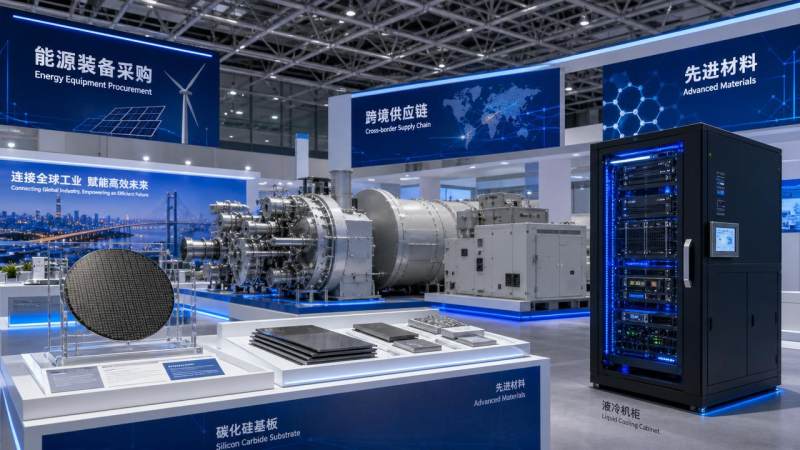
CSSOPE 2026 concluded in Shanghai on July 2–3, 2026, following factory visits opened on July 1, bringing together more than 600 international buyers from over 40 countries around a procurement agenda centered on resilience, intelligence, and greener energy sourcing. For energy equipment suppliers, advanced materials manufacturers, procurement teams, and supply chain service providers, the event is worth close attention because it links large-scale purchasing signals with a visible expansion into future-oriented materials and devices tied to both energy and high-end manufacturing demand.
What the summit confirmed
The confirmed facts are clear. CSSOPE, the International Summit and Exhibition on Procurement of Petroleum and Chemical Equipment, was held on July 2–3, 2026, with factory tours available on July 1. The event attracted more than 600 international purchasers from over 40 countries and announced orders valued in the hundreds of billions. A dedicated area for new materials and future industries featured PEEK applications in full-size humanoid robots, diamond-copper liquid-cooling cabinets, silicon carbide substrates, and gallium oxide devices. According to the event summary provided, these displays were positioned directly toward global demand in energy and high-end manufacturing procurement.
Why different market participants may pay attention
Procurement teams are likely to focus on supplier depth
From an industry perspective, buyers in energy-related procurement may read this event as a sign that sourcing decisions are being discussed across both traditional equipment needs and newer technology categories. The main impact is likely to appear in supplier screening, category expansion, and the way procurement teams compare delivery capability with technology relevance.
Equipment and materials manufacturers may see category boundaries shifting
Analysis shows that the dedicated new materials and future industries section matters beyond exhibition design. For manufacturers, the combination of petroleum and chemical equipment procurement with PEEK, silicon carbide, gallium oxide, and advanced cooling solutions suggests that procurement conversations may increasingly connect process industry demand with high-spec manufacturing components. What deserves closer attention is whether customers begin asking for broader technical documentation, qualification evidence, or cross-application supply capability.
Supply chain and service providers may face more complex coordination needs
For logistics, documentation, inspection, and delivery support providers, the presence of 600-plus overseas buyers from more than 40 countries points to a procurement environment with stronger cross-border coordination requirements. The likely effect is not a single operational change, but a higher need for smoother execution across communications, fulfillment timing, and supporting trade documents where international buyers are involved.
End-use industrial customers may watch the technology mix
Observably, end users in energy and high-end manufacturing may pay attention to the product mix highlighted at the event. The reason is that the technologies presented span materials, thermal management, and semiconductor-related components, which may influence how end users frame future sourcing conversations even if immediate purchasing decisions remain product-specific.
What companies should watch next
Track how order signals translate into actual procurement steps
Companies should distinguish between announced order value and the practical follow-through that affects business execution. In this context, closer attention should go to whether post-event communication clarifies product categories, procurement stages, delivery expectations, or qualification requirements tied to these orders.
Review priority product lines against current demand exposure
For firms involved in energy equipment, advanced materials, cooling systems, or semiconductor-related components, the most relevant task is to assess whether their current offerings align with the categories highlighted at the summit. The point is not to assume immediate market expansion, but to check where product positioning, technical readiness, or customer-facing materials may need updating.
Prepare documentation and fulfillment messaging for international buyers
Because the event drew buyers from more than 40 countries, suppliers and service providers should pay close attention to the consistency of qualification files, trade documents, lead-time communication, and delivery commitments. This is especially relevant for companies hoping to convert exhibition-stage contact into procurement-stage discussion.
Separate showcase value from near-term revenue certainty
Analysis shows that featured technologies such as PEEK humanoid robot applications, diamond-copper liquid-cooling cabinets, silicon carbide substrates, and gallium oxide devices can raise visibility, but visibility is not the same as immediate volume. Companies should therefore manage internal planning carefully and avoid treating exhibition exposure alone as confirmed demand.
How this signal is best understood right now
This article's assessment is an observation rather than a statement of fact: it is more appropriate to understand the summit as a combined short-term procurement signal and a longer-term directional indicator. The short-term signal comes from the scale of buyer participation and the announced order value. The longer-term indicator comes from the decision to place new materials and future-industry technologies alongside energy procurement, which may reflect a broader overlap between industrial sourcing resilience, smarter equipment demand, and greener procurement priorities. Even so, the event summary alone does not confirm how quickly these signals will convert into repeatable orders, standardized sourcing requirements, or category-wide demand shifts.
A measured takeaway for the market
On balance, CSSOPE 2026 appears most relevant as a marker of where procurement attention is gathering rather than as proof of a fully settled market outcome. The event confirms strong international buyer interest and a visible connection between energy purchasing needs and advanced material or device categories. A neutral reading is that companies across procurement, manufacturing, and supply chain services should treat this as a development worth monitoring closely, especially where supplier qualification, product fit, and cross-border execution are concerned.
Basis of this article and what still needs verification
This article is based on the user-provided event title, event date, and event summary. For this type of industry update, commonly relevant source categories would include official event announcements, company disclosures, industry association information, authoritative media reports, and documentation from standards-related organizations. A specific official source link was not provided in the input, so further verification is still required. The main follow-up areas to watch are whether later official communications provide more detail on order composition, procurement requirements, and the practical business implications of the technologies highlighted during the event.
Recommended News
- 2026.09.18How to Evaluate a Polymer Compounding Manufacturer for High-Performance ApplicationsMr. Arthur Mercer
- 2026.09.17Chemical Manufacturing Compliance: Building a REACH-Ready Chemical Inventory SystemDr. Felix Sterling
- 2026.09.16Battery Material Purity Control: Critical Tests for Stable Cell PerformanceElectrochemistry Fellow
The VitalSync Intelligence Brief
Receive daily deep-dives into MedTech innovations and regulatory shifts.