
US DOMINANCE Act Takes Effect, Reshaping Critical Minerals Sourcing
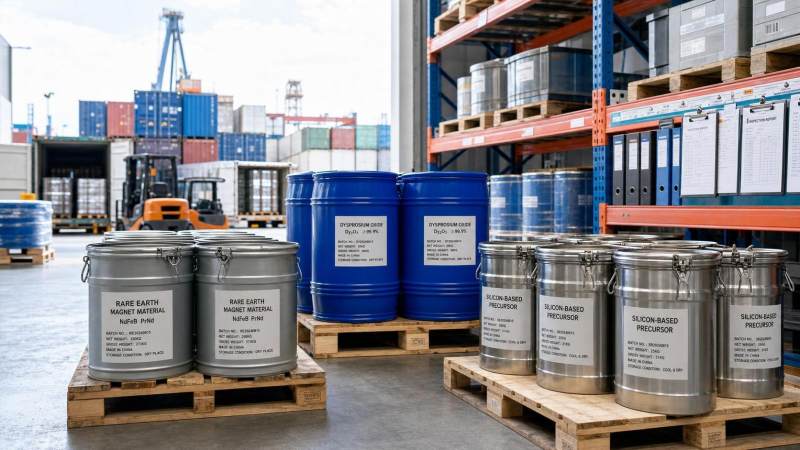
On June 18, 2026, the DOMINANCE Act entered into effect in the United States, putting formal policy support behind overseas critical mineral projects tied to trusted allies. For companies involved in rare earth magnets, high-purity dysprosium oxide, silicon-based precursors, and related procurement and supply chain functions, the immediate point of attention is not only the funding support itself, but also how the law may influence supplier qualification reviews and order allocation across Southeast Asia, Australia, and Canada.
What the Act now puts in place
According to the information provided, the DOMINANCE Act formally took effect on June 18, 2026. The law authorizes direct financing, technical assistance, and export credit support for critical mineral projects located in trusted allied jurisdictions.
The materials specifically highlighted in the summary include rare earth permanent magnets, high-purity dysprosium oxide, and silicon-based precursors. The Act also makes clear that certified supply chain partners outside China are included on a priority procurement whitelist.
Based on the same confirmed information, this policy framework directly affects how global buyers assess supplier qualifications and distribute orders among suppliers in regions such as Southeast Asia, Australia, and Canada.
Where supply chain pressure points may emerge
Procurement teams may face faster supplier screening changes
From an industry perspective, procurement organizations are among the first to feel the effect because the Act explicitly connects policy support with certified supply chain partner status. That means supplier review processes, approved vendor lists, and sourcing comparisons may receive renewed scrutiny, especially where buyers need to align procurement decisions with whitelist-related considerations.
Upstream and processing participants may see qualification become more commercial
For upstream producers and processors linked to the covered materials, the potential impact is not limited to production capability. Analysis shows that qualification status, documentation readiness, and alignment with buyer compliance expectations may become more influential in commercial discussions, particularly when buyers are comparing supply options across non-China partner markets.
Supply chain service providers may need to adapt supporting workflows
Logistics, trade execution, and broader supply chain service participants may also be affected because policy-driven sourcing changes often move through documentation checks, delivery coordination, and customer communication. What deserves closer attention is whether clients begin asking for clearer proof of supplier status, origin positioning, or project alignment with the new policy framework.
Downstream manufacturers may reassess sourcing concentration
For manufacturers that depend on the listed materials, the impact may appear in sourcing strategy rather than immediate volume change. Observably, a law that combines financing support with procurement preference can prompt buyers to revisit concentration risks, backup supply arrangements, and the relative positioning of suppliers in allied markets.
What companies should watch now
Track how official wording is reflected in operational rules
The Act is now effective, but companies should distinguish between the policy signal and the practical rules that buyers or counterparties apply in sourcing decisions. Analysis shows that the key issue is how terms such as certified supply chain partner are interpreted in qualification and purchasing workflows.
Review exposure in the named material categories
Businesses connected to rare earth permanent magnets, high-purity dysprosium oxide, and silicon-based precursors should review where they sit in the supply chain for these categories. The most relevant question is whether current products, contracts, or supplier relationships could be affected by changing buyer preferences tied to the whitelist framework.
Prepare supplier files and customer-facing documentation
What deserves closer attention is the practical side of supplier management. Companies may need to organize qualification materials, origin-related documentation, delivery records, and other supporting files more carefully if customers begin tightening review standards or accelerating reassessment of approved suppliers.
Separate policy momentum from immediate order conversion
Observably, the existence of financing support and procurement preference does not automatically mean instant transaction shifts in every segment. Firms should therefore prepare for customer questions and scenario planning, while avoiding assumptions that all demand or order allocation patterns will change at once.
Why this matters beyond the headline
Analysis shows that this development is better understood as a supply chain policy signal with direct commercial implications, rather than as a fully settled market outcome. The confirmed facts point to a clearer US preference for working with certified non-China supply chain partners in selected critical mineral areas.
At the same time, it remains important to observe how quickly buyers convert that preference into actual qualification standards, procurement rules, and order decisions. For the industry, the significance lies in the interaction between policy language and day-to-day sourcing practice.
How to read the development at this stage
At this stage, it is more appropriate to understand the Act's entry into force as both an immediate operating signal for procurement and a longer-term indicator for supply chain alignment in critical minerals. The confirmed information already suggests pressure on supplier assessment and order distribution, but the full business impact still depends on how market participants implement these priorities in contracts, approvals, and sourcing execution.
Basis of this article
This article is based on the user-provided news title, event date, and event summary. The specific official source link was not provided in the input and still requires follow-up verification.
For this type of industry development, commonly relevant source categories may include official government notices, company disclosures, industry association updates, authoritative media reporting, and standards-related documents. Areas that still merit continued observation include any further official clarification, buyer-side qualification criteria, and the practical rollout of procurement preferences in the covered material segments.
Recommended News
- 2026.09.18How to Evaluate a Polymer Compounding Manufacturer for High-Performance ApplicationsMr. Arthur Mercer
- 2026.09.17Chemical Manufacturing Compliance: Building a REACH-Ready Chemical Inventory SystemDr. Felix Sterling
- 2026.09.16Battery Material Purity Control: Critical Tests for Stable Cell PerformanceElectrochemistry Fellow
The VitalSync Intelligence Brief
Receive daily deep-dives into MedTech innovations and regulatory shifts.