
How to Procure Sodium Hydroxide: A Supplier Evaluation Checklist
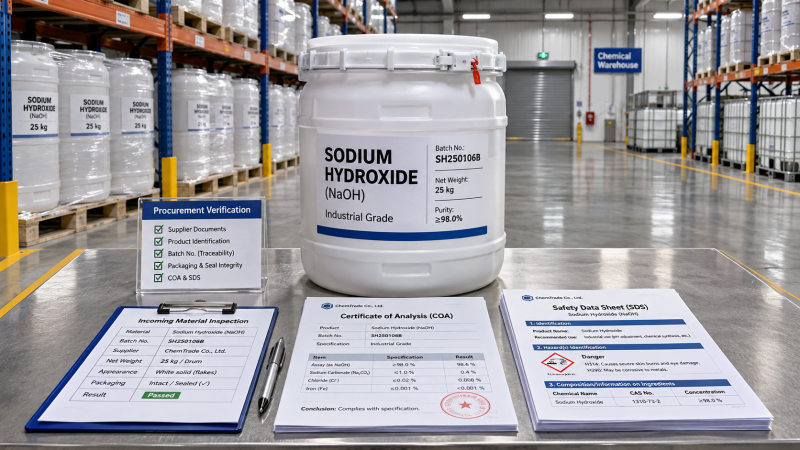
Sodium hydroxide is a basic raw material in chemical processing, cleaning, neutralization, saponification and other industrial operations. Procurement can look straightforward: confirm the name, request a quantity and compare prices. The operational risk usually sits outside that short exchange. Form, concentration, purity, packaging, transport documents, batch records, storage and emergency arrangements all influence whether the material can be received and used without delay.
A procurement team can begin with the product identity shown on the Sodium Hydroxide CAS 1310-73-2 page, then convert the production requirement into acceptance criteria. This approach does not make an order unnecessarily complicated. It prevents a common problem: discovering after delivery that a material, document or package does not match the process or the destination market.
Confirm identity and intended use before asking for a quote
The purchasing request should include the English name, local name, CAS number, physical form, intended process and any required impurity limits. Sodium hydroxide may be purchased as a solid or as a solution, and the two forms create different requirements for packaging, transport, storage, dosing and handling. A neutralization line, a cleaning system and a chemical synthesis operation may all use the same substance while needing different concentration, delivery and documentation details.
The public product page describes Sodium Hydroxide CAS 1310-73-2 as strongly alkaline, rapidly soluble and suitable for reactions such as neutralization, saponification and sulfonation. It also notes the need for sealed storage in a dry and dark environment away from acids and flammables. These points should be converted into practical procurement and warehouse questions. They should not be copied as a substitute for the current SDS, site risk assessment or destination-market requirements.
Specification items that are easy to miss
Evaluate whether a supplier can be verified, not only whether it can quote
A supplier that answers quickly may still be unable to provide consistent batches or a complete document package. Ask specific questions: Where is the material produced or packed? Can the supplier provide records for more than one batch? Which packages are suitable for the intended route? How is the delivery date confirmed? What happens when a label, seal, COA or package is inconsistent with the order?
Supplier comparisons are clearer when divided into entry requirements and scored factors. Entry requirements may include chemical identity, basic quality, document completeness and a viable transport plan. Scored factors can include lead-time consistency, communication, package design, batch traceability, technical support and response to nonconformance. This prevents a low initial price from hiding later expenses related to missing documents, repacking, reinspection or delayed production.
Compliance documents belong in the order workflow
When a product is being evaluated for a chemical-compliance or REACH-oriented supply chain, avoid treating “compliant” as a conclusion without evidence. The procurement file should identify which documents are required, which market they apply to, whether the document matches the shipped batch and who is responsible for updates. The names, versions and delivery timing of the documents should be agreed before the order is released.
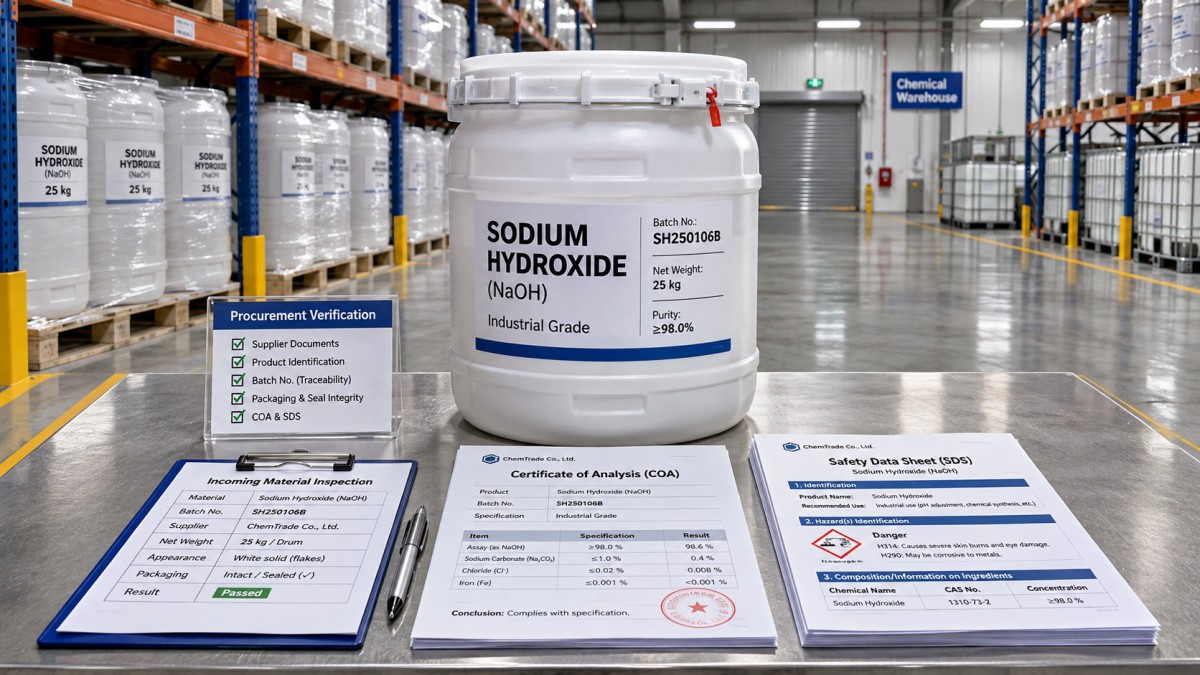
An SDS is not only a file for an archive. It should inform warehouse layout, personal protection, spill response, incompatibility controls, training and emergency contact information. A supplier that provides a clear, current document package may reduce more operational risk than a supplier that only emphasizes immediate availability.
Use a sample or small shipment as a verification gate
Before a large order, use a sample or controlled small shipment to verify package handling, dissolution or dosing, process behavior and cleaning practice. The record should identify the batch, date, process conditions and result. Verbal feedback is not enough for a material that will be used repeatedly across a production line.
For solid material, check moisture exposure, caking, opening practice and transfer equipment. For a solution, check concentration, temperature, pumping, container compatibility and drain arrangements. The trial should also confirm that the receiving team can read the label, locate the SDS, isolate incompatible materials and complete the internal release procedure.
Compare total delivered risk and cost
Two quotes can describe the same chemical while covering different responsibilities. One may include suitable packaging and a complete document pack; another may leave those matters to the buyer. Logistics, unloading, storage, sampling, retest, waste handling and emergency preparation should be visible in the evaluation. The result is not a promise of a fixed price. It is a clearer view of what the purchasing decision actually commits the company to manage.
Lead time also needs a definition. Does it begin when the order is confirmed, when documents are approved or when the goods leave the supplier? How are partial shipments handled? Can the supplier preserve batch identity across multiple deliveries? These questions matter when production planning depends on the material arriving with the right documents and condition.
Procurement decision checklist
- Name, CAS number, form and process use are consistent across the order and document package.
- Specification, package, label, transport responsibility and unloading conditions are written down.
- COA and SDS records correspond to the batch and destination market.
- A sample or small shipment has been evaluated under controlled process conditions.
- Warehouse, unloading, personal protection and spill-response arrangements are ready.
- The comparison includes logistics, documents, inspection, storage and nonconformance risk.
Questions for a supplier review meeting
A short technical review meeting can reveal gaps that a quotation cannot. Ask the supplier to walk through one recent batch from production or packing record to label, COA, SDS and shipment. Ask how a changed specification is communicated, how a damaged package is quarantined and how a complaint is connected to the correct batch. These questions do not require the buyer to disclose confidential process details; they test whether the supplier has a repeatable control method.
It is also useful to confirm the boundary between supplier and buyer. Who approves the package before loading? Who arranges a replacement when a seal is damaged? Who provides updated documents when a destination rule changes? Which contact is available outside the normal ordering team? Clear answers create a practical escalation path and make it easier to decide whether a supplier is suitable for a one-time order, a scheduled program or a critical production input.
Finally, keep the approved specification readable for the people who receive and use the material. A short internal sheet can connect the product identity, package, batch, storage location, document links and release status without replacing the formal SDS or quality record. This reduces the chance that an old quotation, an unapproved substitute or a package with missing identification will enter the process simply because the name appears familiar. It also gives production, warehouse and quality teams one shared reference during a busy delivery window.
FAQ
Is checking the CAS number enough?
No. The CAS number helps confirm chemical identity, but the buyer must also confirm form, concentration or purity, impurities, package, documentation, transport and intended use.
Why can supplier quotes differ so much for the same material?
Differences may come from form, purity, package, logistics, document support, lead time, inspection and responsibility for damaged or rejected goods. Compare delivered cost and verification risk rather than unit price alone.
What should the warehouse confirm before receipt?
Use the current SDS and site safety procedure to confirm sealed, dry storage, separation from incompatible materials, suitable unloading, personal protection and an emergency response path. The exact controls depend on the product form and the facility risk assessment.
Recommended News
- 2026.11.07Lithium Battery Rebound: Separators and Copper Foil Gain as Supply Chain Profits ShiftMr. Arthur Mercer
- 2026.11.07How to Procure Sodium Hydroxide: A Supplier Evaluation ChecklistDr. Felix Sterling
- 2026.11.07Selecting Fatigue-Resistant Composites for Wind Turbine BladesComposite Materials Scientist
The VitalSync Intelligence Brief
Receive daily deep-dives into MedTech innovations and regulatory shifts.