
How Often Should Specialty Chemical Facilities Undergo Compliance Audits?
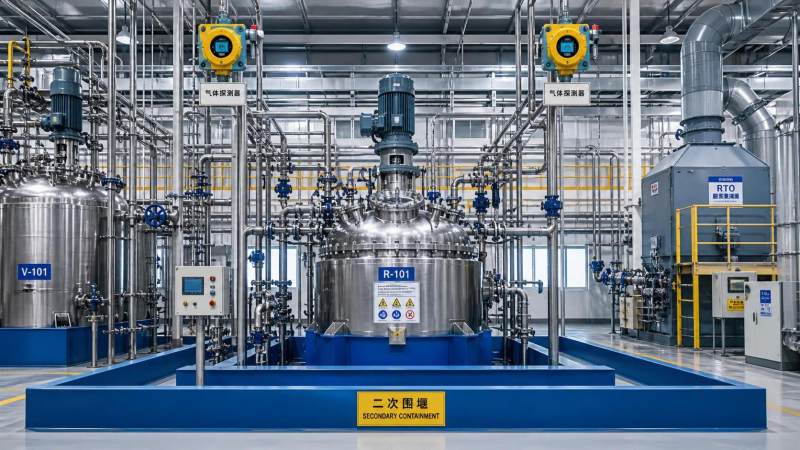
A specialty chemical facility should treat compliance auditing as a recurring control cycle rather than a single annual event. A practical baseline is a formal, facility-wide internal audit at least once each year, supported by targeted reviews throughout the year. Higher-hazard operations, frequent process changes, regulated air or water releases, highly toxic materials, and ultra-high-purity production lines often justify quarterly or event-driven audits. External or customer audits follow their own schedules, but internal readiness should not wait for an outside visit.
The right frequency is determined by exposure and change. A stable packaging operation handling a well-characterized, low-volatility formulation has a different audit need from a plant that fills pyrophoric electronic gases, produces fluorinated intermediates, blends electrolyte solvents, or purifies wet chemicals for semiconductor use. The question is not simply how often records are reviewed. It is how often the facility needs to verify that permits, operating conditions, physical controls, training, waste handling, and batch documentation still match the work actually being performed.
Set the audit rhythm around operational risk
An annual comprehensive audit is a sensible floor for many specialty chemical sites because permits, hazardous-material inventories, waste profiles, maintenance histories, and training records change over time. Yet an annual review alone can leave long periods in which small deviations become accepted practice. A missing inspection signature, an outdated emergency contact list, an unlabeled transfer hose, or a revised raw-material specification may appear minor in isolation. Together, such gaps can indicate that the management system is no longer controlling the process as designed.
More frequent reviews are appropriate where a deviation can rapidly affect people, the environment, product quality, or downstream customer operations. A high-purity gas installation, for example, needs close attention to cylinder identification, manifold integrity, exhaust treatment, gas detection, preventive maintenance, and emergency isolation. A facility producing battery cathode materials needs a different focus: dust collection, metal-containing residues, wastewater characteristics, solvent recovery, traceability of incoming precursors, and contamination control between campaigns.
These intervals are planning guides, not legal conclusions. Permit conditions, local requirements, contract obligations, and the specific substances present may require a more frequent schedule. The internal schedule should meet or exceed those external obligations and should be revised whenever the hazard profile changes.
Use separate frequencies for the system and the critical controls
A broad compliance audit and a frontline control verification should not be confused. The broad audit evaluates whether the facility's compliance system is complete and functioning: permits, written procedures, regulatory registers, training assignments, incident investigation, document control, contractor oversight, waste records, and corrective-action closure. It is detailed but intermittent.
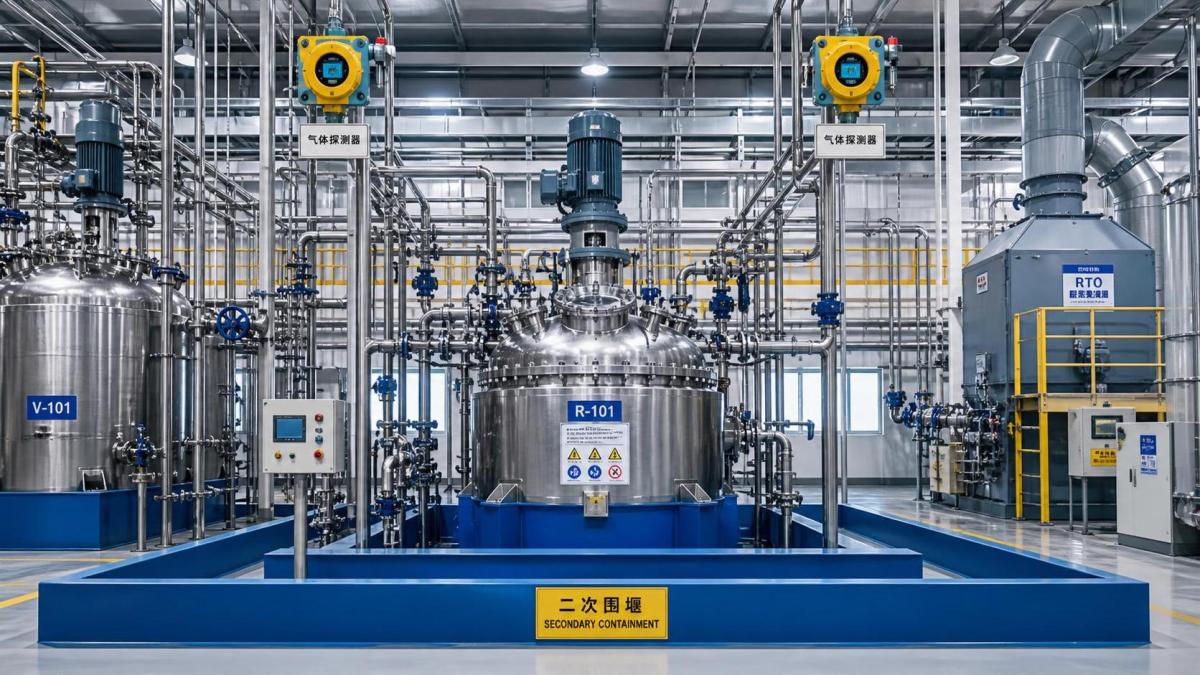
Critical controls need shorter review cycles. These are the safeguards that prevent a known high-consequence failure, such as scrubber performance, pressure-relief device inspection, local exhaust ventilation, containment around bulk storage, interlocks, alarms, emergency shower access, or the segregation of incompatible chemicals. Their inspection frequency is driven by equipment function, process conditions, maintenance instructions, and the consequences of failure. A once-a-year audit should verify that these reviews occurred and were technically meaningful; it cannot substitute for them.
This distinction matters when audit results appear satisfactory on paper while the physical process tells a different story. Records may show that an exhaust system was inspected, but the audit should determine whether the inspection measured the relevant condition. For a corrosive vapor system, a visual check alone may not reveal declining capture performance, duct corrosion, or a bypass condition. For a high-purity liquid line, a completed maintenance ticket does not establish that the work preserved cleanliness, prevented moisture ingress, and maintained component traceability.
Triggers that require an audit before the next scheduled date
Event-driven audits are where many facilities gain the most value. They should occur after a change or warning sign that could invalidate earlier assumptions. The review does not always need to cover the entire site. It should be scoped broadly enough to identify connected controls, records, and personnel practices affected by the event.
- A new raw material, supplier, impurity profile, solvent, catalyst, packaging format, or transport arrangement can alter hazard communication, waste classification, storage compatibility, exposure controls, and customer specifications.
- Process changes deserve review when they modify temperature, pressure, batch size, reaction time, transfer method, purification sequence, emission point, ventilation load, or cleaning chemistry. A change that improves yield may also increase fugitive emissions or introduce a residue not addressed in existing waste procedures.
- Near misses, spills, unexpected odors, alarm activations, off-specification batches, unexplained corrosion, or repeated minor maintenance failures should trigger a focused audit. Repeated small events often show that a control is weak even when no reportable incident has occurred.
- Following a regulatory inspection, customer finding, or internal nonconformance, the corrective action needs an independent effectiveness review. Closing a task in a tracking system is not evidence that the underlying condition has been removed.
- Extended shutdowns and restarts warrant scrutiny. Idle equipment may accumulate residues, degrade seals, lose calibration status, or return to service with incomplete line clearance and outdated operating instructions.
Personnel changes can be an equally important trigger. When experienced staff leave, informal knowledge often disappears first: which valve is normally isolated during maintenance, which waste stream requires separate labeling, how a purge sequence is verified, or where sampling records are reconciled. An audit after a change in supervision or a rapid hiring period should test work execution, not merely confirm that training modules were assigned.
Audit the points where compliance and product control overlap
Specialty chemical facilities often separate environmental, health and safety, quality, and operations reviews into different functions. That separation is useful for accountability, but it can obscure failure paths that cross those boundaries. The same material-handling error may create a worker-exposure issue, a hazardous-waste problem, a release risk, and a purity deviation.
Consider a semiconductor wet chemical transferred from a bulk container into a day tank. Compliance review may focus on secondary containment, labeling, exposure protection, and waste handling. Quality review may focus on particle generation, metallic contamination, filter integrity, and lot traceability. Both perspectives need to meet at the transfer point. A substitute gasket, a poorly controlled rinse, or a non-approved hose can satisfy neither objective, even if the vessel remains properly labeled and the product test result initially passes.
For fluoropolymer or fluorinated chemical operations, the audit scope should distinguish between material identity and process behavior. A safety data sheet may accurately describe the input, while thermal processing, cleaning, abatement, or waste treatment creates a different emissions or residue profile. For reactive gases, cylinder inventory reconciliation is necessary but insufficient; the review must also examine connection practices, purge procedures, gas cabinet condition, detection coverage, ventilation response, and the status of emergency equipment.
Battery-material processes present another common overlap. Fine powders can be both a product-quality concern and an exposure or housekeeping issue. The audit should trace dust from receipt through weighing, mixing, collection, cleaning, and disposal. A clean production room does not automatically prove that captured dust is properly characterized, stored, or routed. Conversely, a correct waste label does not prove that dust migration is controlled near sensitive production steps.
Build an audit scope from evidence, not only from procedures
A strong audit begins with written requirements but does not end there. Procedures reveal the intended process. Evidence shows whether the process is operating as intended. Audit sampling should follow a material or batch through the facility: receiving, storage, dispensing, processing, quality release, packaging, shipment, residue management, and record retention. This approach exposes handoffs where records are complete in separate systems but inconsistent as a whole.
Useful evidence includes current permits and operating limits, inspection logs, calibration status, maintenance work orders, training records, hazardous-material inventories, waste manifests, shipping papers, batch records, deviation reports, change-control files, and emergency drill observations. The audit should compare dates, quantities, equipment identifiers, chemical names, and revision levels across these sources. A discrepancy is not always a violation, but it should have an understandable explanation.
Physical observation remains essential. Labels can be correct in an electronic inventory while a field container is missing a hazard identifier. A procedure may require closed transfer, while a temporary setup uses an open funnel because the designated connection does not fit. A waste accumulation point may appear orderly during a scheduled walkthrough but lack a reliable method for recording start dates or determining container compatibility. These conditions are often visible only where work is done.
Test corrective actions for durability
Corrective actions frequently fail because they address the immediate finding without changing the conditions that caused it. Replacing a damaged label resolves a visible deficiency; it does not explain why labels are exposed to solvents, why replacements are unavailable, or why routine inspections missed the damage. Adding a reminder to a procedure may not improve behavior if the task is performed under time pressure with unclear ownership.
When reviewing closed findings, ask whether the action changed the process, the equipment, the record flow, or only the document. Then sample later work. If a corrective action involved training, observe whether the revised step is being followed. If it involved a maintenance change, inspect the affected equipment and review subsequent work orders. If it involved a supplier or material change, compare receiving controls, specifications, and traceability records after implementation.
Keep the schedule proportionate without making it superficial
Over-auditing low-risk records can consume attention needed for high-consequence controls. Under-auditing because operations appear stable creates a different problem: stability becomes an assumption rather than a verified condition. A proportionate program assigns depth according to chemical hazard, release pathways, product sensitivity, change rate, incident history, and the reliability of existing controls.
Rotating audit emphasis can preserve depth. One review may trace waste generation and off-site shipment from a specific process area. Another may examine change control for purity-sensitive equipment. A later review may focus on emission-control maintenance, emergency response readiness, or contractor work near chemical systems. The annual audit then integrates these findings and determines whether recurring themes reveal a broader management-system weakness.
Audit frequency should increase when findings repeat, records require excessive reconstruction, or controls depend heavily on individual memory. It can be reconsidered only after sustained evidence shows that corrective actions are effective, process changes are controlled, field conditions match documented requirements, and critical-control inspections are consistently completed. The objective is not to create a fixed calendar rule. It is to maintain enough scrutiny that deviations are found while they are still manageable.
Recommended News
- 2026.09.21Material Purification Methods: How to Choose Processes for High-Purity ProductionSemiconductor Chemistry Architect
- 2026.09.20How to Evaluate High-Temperature Polymer Suppliers for Aerospace and EV ProgramsMr. Arthur Mercer
- 2026.09.19Evaluating Semiconductor Packaging Materials Manufacturers: Quality and Supply RiskMr. Arthur Mercer
The VitalSync Intelligence Brief
Receive daily deep-dives into MedTech innovations and regulatory shifts.