
ECHA Adds 3 PFAS Surfactants to SVHC List
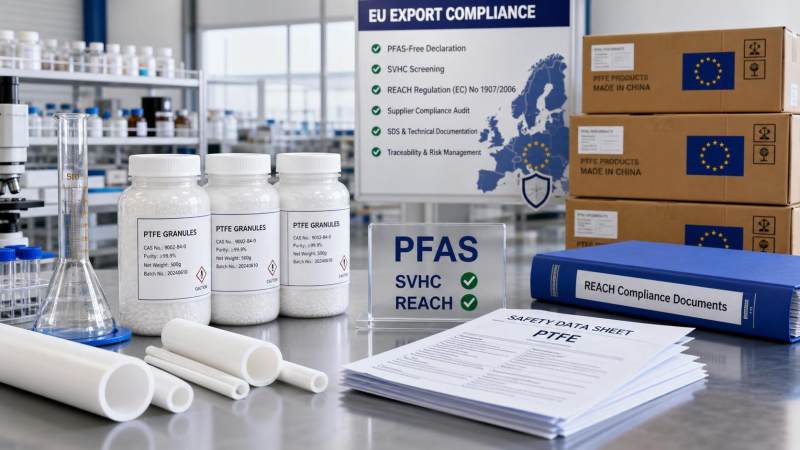
On July 26, 2026, the European Chemicals Agency updated the SVHC Candidate List by adding three fluorinated surfactants, including C6FTAB and two newer PFAS substitutes. For companies exporting fluoropolymer materials such as PTFE, FEP, and PFA, as well as fluorinated additives, this is not just a list update. It signals a stricter compliance path under REACH, especially in notification and supply-chain communication, with practical consequences for exporters, importers, procurement teams, document control, and customs-facing delivery arrangements.
What the update confirms
According to the information provided, ECHA formally placed three new fluorinated surfactants on the SVHC Candidate List on July 26, 2026. The substances identified include C6FTAB and two new PFAS alternatives. The update directly triggers stricter notification and communication obligations under REACH. The impact described in the source information extends to supply chains involving fluoropolymers such as PTFE, FEP, and PFA, as well as products containing fluorinated additives that are exported to the European Union. The same source also indicates that overseas importers need to reassess the completeness of supplier SDS and SCIP filings, and that customs clearance delays may become a practical risk.
Where the compliance pressure is likely to appear first
Export-facing material suppliers
From an industry perspective, suppliers of fluoropolymer materials and fluorinated additives may be affected first because the Candidate List update changes the compliance expectations attached to substance information and downstream communication. The immediate pressure is likely to appear in product composition review, document consistency, and customer-facing declarations used for EU-bound shipments.
EU importers and procurement functions
Importers and procurement teams are likely to feel the change through supplier qualification and file verification. Analysis shows that the practical issue is not only whether a product contains affected substances, but whether SDS records, SCIP-related information, and supporting compliance documentation remain complete and aligned across the supply chain. Where documentation is incomplete or inconsistent, purchasing decisions and inbound scheduling may be affected.
Manufacturers shipping finished or semi-finished goods
For processors and manufacturers using PTFE, FEP, PFA, or fluorinated additives in finished or semi-finished goods, the impact may extend beyond raw material review into shipment preparation and customer communication. What deserves closer attention is whether internal product data, supplier declarations, and export documents can support EU delivery requirements without creating additional questions at the point of import.
Logistics and supply-chain service providers
Supply-chain service providers may not be the regulated party in substance reporting, but they can still be affected through delivery timing and customs coordination. Observably, when compliance files are being rechecked by importers or suppliers, shipment release and clearance planning can become more sensitive to document gaps.
What companies should review now
Recheck substance-related documentation
Analysis shows that companies shipping relevant materials or products to the EU should review whether existing SDS content and SCIP-related submissions are complete and internally consistent. This is particularly relevant where fluorinated additives or fluoropolymer-based components are part of the export scope.
Verify supplier declarations before shipment commitments
What deserves closer attention is the reliability of supplier-provided compliance statements. Importers and exporters may need to confirm whether upstream declarations still support current REACH communication obligations after the Candidate List update, especially before confirming delivery windows or customs documentation sets.
Watch product categories with fluoropolymer exposure
From an industry perspective, products involving PTFE, FEP, PFA, or related fluorinated inputs warrant closer screening because the update affects the compliance route around these supply chains. The current information does not provide detailed execution criteria, so this should be treated as a priority review area rather than a confirmed enforcement outcome.
Prepare for timing and handover risk
Observably, one practical concern is the interaction between compliance review and shipment execution. Where customers, importers, or brokers request renewed supporting files, order release, customs handling, or delivery scheduling may slow down. Companies with tight delivery commitments should therefore pay attention to document readiness and traceability.
Why this reads as an execution signal
Analysis shows that this update is better understood as an operational compliance signal rather than a purely formal regulatory headline. The confirmed change is the addition of three fluorinated surfactants to the SVHC Candidate List, but the industry relevance comes from the immediate knock-on effect under REACH communication and notification duties. At the same time, it is more appropriate to understand this as a live compliance development that still requires continued observation, because the provided information does not define detailed enforcement practice, customer-specific acceptance thresholds, or market-wide implementation timing.
How to interpret the development at this stage
At this stage, the update should be read as a real compliance change with direct relevance to EU-bound fluoropolymer and fluorinated additive supply chains. It does not yet justify broad conclusions about final market outcomes, but it clearly raises the importance of document completeness, supplier verification, and shipment readiness. For affected businesses, the practical issue is less about headline sensitivity and more about whether current files, declarations, and handover processes can withstand stricter scrutiny without disrupting trade execution.
Basis of this article
This article is based on the user-provided news title, event date, and event summary. For developments of this kind, relevant source types typically include official notices, regulator publications, customs or trade authority information, industry association releases, standards-related documents, and reporting from authoritative trade media. No specific official source link was provided in the input, so the underlying official publication path still needs to be verified on an ongoing basis. Continued attention should also be given to later policy clarifications, compliance interpretation, tender document changes, industry feedback, and how companies implement the new requirements in practice.
Recommended News
- 2026.09.14Gel Battery Electrolytes: How Ionic Conductivity and Stability Shape Cell DesignElectrochemistry Fellow
- 2026.09.13Fluoropolymer Extrusion Process: How Melt Control Affects Tube QualityPolymer Synthesis Expert
- 2026.09.12How German Implant Makers Select Medical Polymers for Long-Term BiocompatibilityPolymer Synthesis Expert
The VitalSync Intelligence Brief
Receive daily deep-dives into MedTech innovations and regulatory shifts.