
Biodegradable Plastics in India: Applications, Regulations, and Buying Considerations
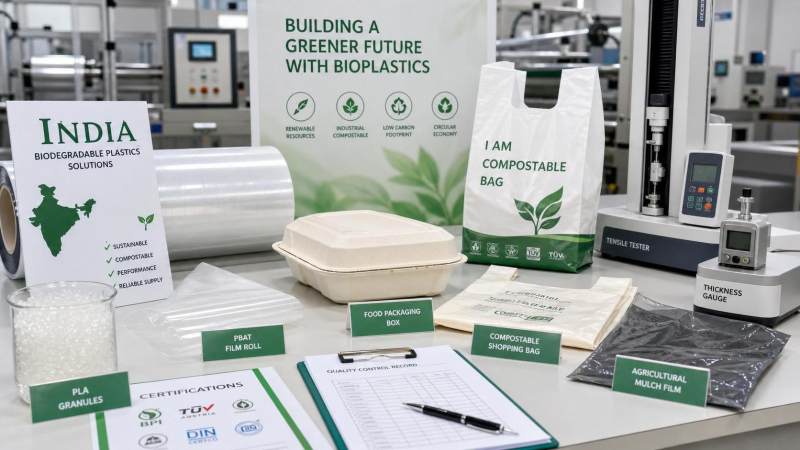
Biodegradable Plastics in India: Applications, Regulations, and Buying Considerations
As demand for sustainable materials grows, biodegradable plastics India is moving from a niche topic to a practical sourcing issue.
Packaging bans, brand pressure, and export requirements are pushing buyers to review alternative polymer options more carefully.
At the same time, cost, processing limits, and uneven supply quality still make purchase decisions less straightforward.
In real buying situations, success depends on matching material behavior, compliance evidence, and supplier consistency with the end use.
Where Biodegradable Plastics India Is Gaining Traction
The strongest demand for biodegradable plastics India is still in flexible packaging, carry bags, food service items, and agricultural films.
These applications face visible waste pressure and tighter attention from regulators, retailers, and organized manufacturing buyers.
Compostable shopping bags and liners are common entry points because they offer a direct replacement path in selected waste systems.
Agricultural mulch films are another active segment, especially where film recovery costs are high or field residue is a concern.
Medical and consumer applications exist too, but they usually require tighter control of performance, certification, and processing stability.
More importantly, not every product marketed as green performs the same way in composting, landfill, or open-environment conditions.
Material Options and Performance Limits
When evaluating biodegradable plastics India, the first question should be material chemistry, not marketing language.
Common options include PLA, PBAT, starch blends, and other compostable resin systems used in film, molded, or extrusion applications.
PLA can provide clarity and stiffness, but heat resistance and brittleness may become issues in tougher handling environments.
PBAT often improves flexibility and toughness, which helps in bags and films, though it can raise formulation cost.
Starch-based compounds may reduce cost, yet moisture sensitivity and shelf-life performance need close validation before commercial use.
This also means buyers should compare tensile strength, elongation, sealability, printability, and storage behavior under local climate conditions.
- Check processing compatibility with existing film lines, injection molds, or thermoforming equipment.
- Review barrier performance for moisture, oxygen, grease, and shelf-life targets.
- Confirm storage limits during hot and humid transport in India.
Regulations Shaping Biodegradable Plastics India
Regulation is one of the biggest reasons biodegradable plastics India has become a procurement priority.
India’s plastic waste rules and restrictions on certain single-use plastic items have changed the sourcing landscape.
For compostable plastic claims, certification and traceable compliance matter more than broad environmental statements.
In practice, buyers should request proof aligned with recognized Indian requirements and relevant standards.
The Bureau of Indian Standards, Central Pollution Control Board guidance, and labeling obligations are key review points.
A valid file should include material identity, test basis, end-of-life claim scope, and use restrictions.
A compostable certificate does not automatically approve every converting process, additive package, or finished product format.
Buying Considerations: Cost, Supply, and Risk
For most sourcing teams, biodegradable plastics India becomes a cost-performance negotiation rather than a simple sustainability switch.
Prices are usually higher than conventional plastics, especially where imported resin content or specialty additives are involved.
However, total cost should include waste handling, compliance exposure, rejected shipments, and brand risk.
Lead time is another practical issue. Some grades are available locally, while others depend on imported feedstocks or compounds.
That makes supplier auditing essential, especially for lot consistency, moisture control, and formulation transparency.
A Practical Sourcing Approach
A practical biodegradable plastics India sourcing process starts with the application environment and disposal route.
Then narrow the shortlist using regulatory fit, required performance, and converter compatibility.
- Define the exact use case, including weight, temperature, filling, storage, and disposal expectations.
- Request technical data sheets, certification files, and sample retention records.
- Run line trials under actual humidity and production speeds.
- Compare landed cost against compliance savings and rejection risk.
- Approve only after confirming repeatability across at least two supply lots.
From a market perspective, biodegradable plastics India will keep expanding, but the winners will be use cases with clear technical fit.
For procurement decisions, the right move is not chasing every green claim.
It is building a disciplined screen around certification, performance, processability, and dependable supply.
That approach keeps biodegradable plastics India commercially realistic while supporting compliance and longer-term material transition goals.
Recommended News
- 2026.09.14Gel Battery Electrolytes: How Ionic Conductivity and Stability Shape Cell DesignElectrochemistry Fellow
- 2026.09.13Fluoropolymer Extrusion Process: How Melt Control Affects Tube QualityPolymer Synthesis Expert
- 2026.09.12How German Implant Makers Select Medical Polymers for Long-Term BiocompatibilityPolymer Synthesis Expert
The VitalSync Intelligence Brief
Receive daily deep-dives into MedTech innovations and regulatory shifts.