
Advanced Composites or Metals? Where Lifecycle Cost Shifts
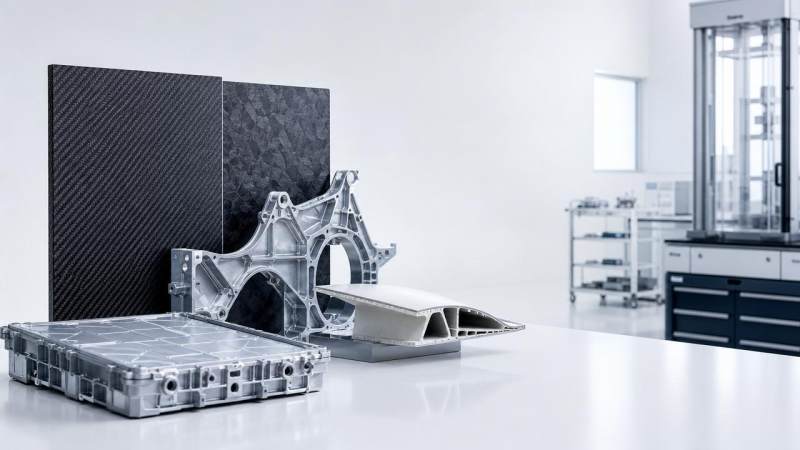
As procurement and investment teams reassess material strategies, the real question is no longer strength alone, but when advanced composites begin to outperform metals on total lifecycle cost. From aerospace structures to energy systems, this shift is being driven by weight reduction, durability, compliance pressure, and long-term operating efficiency—making material selection a strategic business decision rather than a purely engineering choice.
Why lifecycle cost now matters more than upfront price
For business evaluators, the traditional comparison between metal and advanced composites often starts with purchase price and ends too early. In practice, the better decision usually depends on the full cost path: design, tooling, processing, logistics, maintenance, energy use, downtime, compliance, and end-of-life treatment.
This is especially true across aerospace, wind power, battery systems, semiconductor equipment, and specialty industrial components, where AMCS tracks how material performance connects directly to capital efficiency. A lighter or cleaner material is not automatically the lower-cost option, but under the right operating conditions it can shift the cost curve decisively.
- Higher fuel, transport, or energy costs increase the value of lightweight structures.
- Long service intervals reward corrosion resistance and fatigue durability.
- Tighter purity and compliance requirements can make metal-based solutions harder to sustain.
- Localized supply chains and switching barriers can reshape total procurement risk.
The turning point is application-specific
There is no universal crossover point where advanced composites always beat metals. The shift happens when cumulative savings from lower weight, fewer repairs, better chemical stability, or reduced contamination exposure exceed the premium paid for material and process complexity.
Advanced composites vs metals: where the economics diverge
The table below gives a practical comparison framework for procurement teams evaluating advanced composites against aluminum, steel, titanium, or nickel-based metallic solutions in industrial programs.
The key message is simple: metals often appear cheaper at quotation stage, while advanced composites can become cheaper over the asset life if weight, corrosion, fatigue, and part consolidation materially affect operations. Procurement teams should therefore avoid single-line cost comparisons.
Where metals still hold a strong position
Metals remain difficult to displace when impact tolerance, field weldability, thermal conductivity, or mature repair infrastructure dominate the business case. In short production runs or price-sensitive programs, they often remain commercially rational.
Which applications shift to advanced composites first?
Not every component benefits equally from advanced composites. The earliest economic wins usually appear where mass reduction and environmental resistance produce measurable operational savings or risk reduction.
Aerospace and mobility structures
Aircraft interiors, secondary structures, fairings, and selected primary components often justify advanced composites because every kilogram saved influences fuel burn, payload flexibility, and emissions performance. The savings compound over long service lives.
Wind energy and large rotating systems
In long blades and nacelle-related structures, weight affects transport, installation, fatigue behavior, and energy capture efficiency. Composite economics improve as blade size increases and offshore maintenance becomes more expensive.
Battery and new energy systems
Material choice in enclosures, insulation interfaces, and supporting structures increasingly balances flame performance, dielectric behavior, mass, and corrosion exposure. Here AMCS connects advanced composites with the broader battery chemicals ecosystem, where system efficiency and safety are evaluated together rather than in isolation.
Semiconductor and ultra-clean manufacturing equipment
In contamination-sensitive environments, specialty engineering plastics and non-metallic solutions can replace metals where chemical resistance, dielectric control, and purity are critical. The cost argument shifts from mechanical strength alone to yield protection and process stability.
- Choose advanced composites earlier when operating costs scale with weight.
- Choose advanced composites earlier when corrosion or fatigue drives recurring shutdowns.
- Choose metals longer when repair simplicity and thermal transfer are primary value drivers.
How to evaluate total cost without missing hidden drivers
Many sourcing teams underestimate the number of hidden variables that determine whether advanced composites are truly economical. The table below summarizes a more decision-ready procurement model.
A proper business case should model these categories over the expected service life, not only over the purchasing quarter. This is where AMCS offers value: connecting materials science, compliance pressure, and supply chain capital logic in one evaluation framework.
A practical sourcing checklist
- Define the real duty cycle, not just the design load case.
- Estimate cost of downtime, field maintenance, and contamination risk.
- Test whether part consolidation can reduce assembly, inventory, or quality escapes.
- Review regional compliance issues before finalizing a resin, coating, or additive package.
- Check supplier capability in purity control, process repeatability, and delivery continuity.
What business evaluators often overlook in advanced composites procurement
The most common mistake is to compare advanced composites and metals as if they were direct material substitutes with identical system architecture. In reality, composites often deliver value only when the design is re-optimized for anisotropy, part integration, and load-path tailoring.
Another missed factor is purity and process compatibility. In sectors linked to semiconductors, batteries, and specialty chemicals, AMCS observes that materials are screened not just for mechanical behavior but also for outgassing, trace contamination, chemical inertness, and interaction with high-purity media.
- A cheaper metallic part may create more downstream cost if it requires coatings vulnerable to regulation or chemical attack.
- A composite solution may fail financially if the organization lacks inspection capability or stable process control.
- A specialty plastic insert or hybrid composite-metal architecture may outperform both pure options.
Why hybrid thinking is becoming more common
Many successful programs do not replace metal entirely. They combine advanced composites, specialty engineering plastics such as PEEK or PTFE where appropriate, and carefully selected metallic interfaces. This reduces risk while capturing part of the lifecycle advantage.
Standards, compliance, and supply-chain realities
For commercial decisions, technical superiority is not enough. Procurement teams must also consider qualification paths, regional regulations, and supply resilience. Depending on the industry, that may involve mechanical testing standards, flame and smoke requirements, chemical resistance verification, or purity-related acceptance criteria.
Why compliance can shift cost faster than engineering
Regulatory developments around persistent chemicals, emissions, worker exposure, and export controls can quickly alter the total cost of ownership. AMCS monitors these shifts closely, particularly where material selection intersects with PFAS alternatives, ultra-high-purity process chemistry, and local-for-local supply models.
For business evaluators, this means a lower-priced legacy material may carry hidden future liabilities. A forward-looking sourcing decision should ask whether today’s specification will remain compliant, procurable, and supportable across the intended product life.
FAQ: procurement questions about advanced composites
How do I know when advanced composites justify the premium?
Start with three triggers: significant weight sensitivity, expensive maintenance exposure, and long service life. If one or more of these are strong, advanced composites deserve a full lifecycle model rather than a price-only review.
Are advanced composites always better than aluminum or steel?
No. Metals can remain the better choice for cost-sensitive volumes, thermal conduction needs, simple repair environments, or highly impact-prone use cases. The right answer depends on system economics, not material fashion.
What should procurement teams ask suppliers first?
Ask about process route, repeatability, inspection method, material traceability, resin or additive compliance, expected lead time, and whether the supplier can support qualification testing. Those questions usually reveal more value than unit price alone.
Can hybrid solutions reduce risk?
Yes. A hybrid architecture can keep metal where conductivity or familiar joining is critical, while using advanced composites where weight, corrosion resistance, or dielectric performance matter most. This often improves adoption speed and commercial confidence.
Why AMCS is relevant when lifecycle cost shifts are hard to read
Material substitution decisions increasingly sit at the intersection of mechanics, chemistry, purity control, regulation, and capital planning. AMCS was built precisely for this cross-disciplinary reality. Its coverage of carbon fiber composites, battery chemicals, semiconductor electronic gases, and specialty engineering plastics helps decision-makers understand where performance ceilings and cost curves are moving together.
That perspective matters when a sourcing decision is not only about replacing metal, but about protecting yield, reducing contamination risk, anticipating compliance pressure, and securing supply in strategic industries. For business evaluators, this means fewer blind spots and stronger internal justification for material strategy changes.
Why choose us for advanced composites evaluation and sourcing insight
If your team is comparing advanced composites with metals, AMCS can help structure the decision beyond surface-level pricing. Our value lies in connecting material performance, compliance risk, purity expectations, and supply-chain constraints into a usable commercial picture.
- Parameter confirmation: review weight, temperature, chemical exposure, purity, dielectric, and durability requirements before locking a specification.
- Material selection support: compare advanced composites, metals, specialty engineering plastics, or hybrid architectures for your target application.
- Delivery and sourcing discussion: assess lead time risk, regional supply options, and qualification implications tied to supplier switching.
- Compliance review: identify potential PFAS, chemical compatibility, or high-purity process concerns that may affect long-term procurement decisions.
- Sample and quotation alignment: clarify what should be tested, what can be benchmarked, and how to build a realistic lifecycle cost comparison before final negotiation.
If you are preparing a sourcing review, capex proposal, or supplier shortlist, contact us with your application conditions, target cost range, required standards, and timeline. We can help you frame the right advanced composites decision before cost, compliance, or qualification risks become expensive surprises.
Recommended News
- 2026.09.18How to Evaluate a Polymer Compounding Manufacturer for High-Performance ApplicationsMr. Arthur Mercer
- 2026.09.17Chemical Manufacturing Compliance: Building a REACH-Ready Chemical Inventory SystemDr. Felix Sterling
- 2026.09.16Battery Material Purity Control: Critical Tests for Stable Cell PerformanceElectrochemistry Fellow
The VitalSync Intelligence Brief
Receive daily deep-dives into MedTech innovations and regulatory shifts.